
What Blinds Actually Keep a Room Cool in Summer
Thermal, pleated and honeycomb blinds are the only blind types genuinely designed to reduce heat gain, since their trapped-air or reflective-backed construction intercepts solar heat at the window rather than after it has already entered the room. A standard roller blind or Venetian blind does very little for a room that overheats. Conservatories and south-facing rooms in particular are misdiagnosed constantly, sold rollers when the actual problem is heat gain, not glare, and the fix is a completely different product.
Key takeaways
- Honeycomb and cellular blinds with solar backing can reduce summer heat absorption through a window by up to 78%, based on independent manufacturer testing on single glazing.
- The same honeycomb structure reduces winter heat loss by up to 46 to 55%, meaning the investment works in both directions rather than solving only a summer problem.
- Standard roller fabric, without a specific solar or thermal backing, is not designed for heat management and does little to stop a south-facing room overheating.
- A conservatory roof is where the majority of solar heat gain happens, so roof blinds matter more for temperature control than side window or door blinds, even though side windows often get quoted first.
- Dark, dense roller fabrics absorb solar energy and radiate it into the room, while lighter or reflective-backed fabrics bounce more heat away before it enters, which is why fabric colour genuinely affects a room’s temperature, not just its light levels.
Why Rooms Overheat: The Problem Most Blinds Don’t Actually Solve
Most people who come to us with an overheating room have already tried a standard blind, usually a roller, and found it made little difference. This isn’t because the blind was fitted badly, it’s because a standard blind was never designed to solve a heat problem in the first place.
A conservatory or heavily glazed room overheats because of solar heat gain: sunlight passes through the glass, is absorbed by surfaces inside the room, and re-radiates as heat that the glass then traps, the same basic mechanism that makes a car interior unbearable on a sunny day. Standard roller or Venetian blinds block light and provide privacy, but most fabrics have no specific thermal or reflective properties, so a significant amount of that solar heat still gets through, or gets absorbed by the blind fabric itself and radiated straight back into the room. Ordinary blinds treat the symptom, glare, without addressing the actual cause, heat.
This is why the most common complaint we hear about conservatories, “we bought blinds and it’s still like a greenhouse in there,” almost always traces back to the wrong product being fitted for the actual problem, not to a fitting or measuring issue.
Which Blinds Genuinely Reduce Heat, and Which Don’t
Honeycomb and cellular blinds
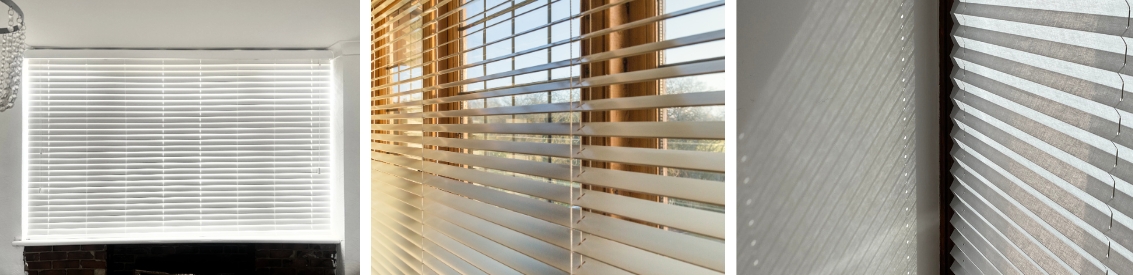
are the strongest performer here, and it isn’t close. Their construction traps air within a hexagonal cell structure between two fabric layers, and that trapped air acts as a genuine insulating barrier, slowing heat transfer through the window in both directions. Independent manufacturer testing on single glazing has recorded summer heat absorption reductions of up to 78% and winter heat loss reductions of up to 46 to 55% with a honeycomb blind closed. This is the blind type to reach for first if heat, not just light, is the actual problem.
Pleated blinds with solar backing
work on a related but distinct principle. Rather than trapping air in cells, the fabric itself carries a reflective or solar-protective coating that intercepts heat at the glass, reflecting a meaningful portion back outside before it enters the room. These are particularly well suited to conservatory roofs and angled glazing, since the pleated construction can be cut and shaped to fit unusual roof angles more easily than a rigid honeycomb structure.
Thermal-backed roller blinds
offer a genuine but more modest improvement over standard fabric, since the backing reflects some heat rather than trapping air the way a honeycomb structure does. They’re a reasonable middle option for a standard window where full honeycomb or pleated treatment isn’t practical or wanted, but for a conservatory specifically, honeycomb or pleated products outperform them.
Standard roller blinds and Venetian blinds without a specific thermal or solar fabric
do very little for heat gain. They’ll reduce glare and add privacy, which matters too, but if the actual complaint is that a room becomes unbearably hot, a standard fabric roller is treating the wrong problem.
Fabric Colour Matters More Than Most People Realise
This is a detail that gets glossed over in most buying advice, and it has a real, measurable effect on how a room feels in summer, not just how much light gets through.
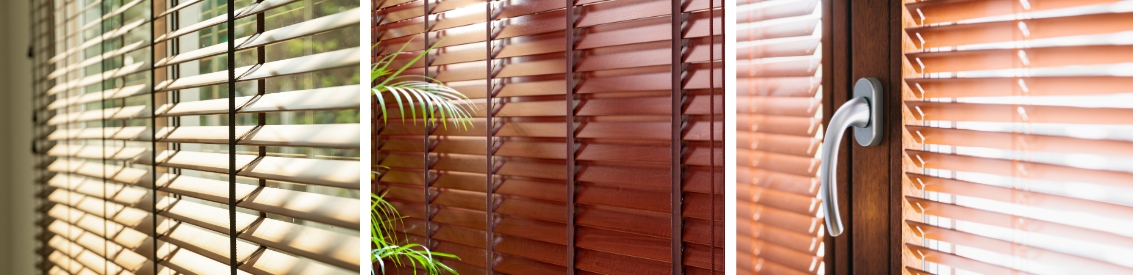
Dark, dense fabrics, including some wooden Venetian blinds, absorb more solar energy than they reflect. That absorbed heat doesn’t just disappear, it warms the fabric itself, which then radiates that heat into the room, meaning a dark blind can end up contributing to the very heat problem you’re trying to solve. Lighter fabrics, and specifically fabrics with a reflective or metallised backing designed for solar performance, including suitable aluminium Venetian blinds, bounce a larger share of that incoming heat away before it’s absorbed at all. If cutting a room’s temperature down is a genuine priority, fabric colour and backing are not a purely aesthetic choice, they’re a functional one.
Why Conservatories Get This Wrong So Often
A conservatory’s main problem is nearly always the roof, not the side windows or doors, since the roof faces the sun directly for the longest stretch of the day and has the largest uninterrupted glazed area. Most of the heat gain in an overheating conservatory comes through that roof glazing.
Despite this, side windows and doors are frequently the first thing quoted and fitted, since they’re the most visually obvious part of the room and the easiest to measure using a standard approach. The roof, which actually needs a pleated or honeycomb blind cut to the specific angle of the glazing bars, often gets left until the room is already known to overheat, at which point it’s addressed as a second, separate purchase rather than being prioritised from the outset.
If you’re planning conservatory blinds and heat is the concern, start with the roof. Side windows and doors matter for glare and privacy, but the roof is where the real temperature difference gets made.
Conservatories Are Not the Only Rooms That Overheat
South and west-facing bedrooms
particularly upper-floor rooms in a terrace that catch direct afternoon and evening sun, can suffer the same heat gain problem as a conservatory, just to a lesser degree given the smaller glazed area. A thermal Roman blind or honeycomb blind here does double duty, since the same trapped-air structure that blocks summer heat also helps the room hold warmth in winter, and for a bedroom, reduced heat gain has the added benefit of a more comfortable room for sleep.
Loft conversion bedrooms with roof windows
face a similar issue to conservatories, since a roof window has the same direct, unobstructed exposure to the sun that a conservatory roof does, just on a smaller scale. A standard Velux blind fabric without thermal properties will do little to stop a loft bedroom becoming genuinely hot on a sunny day.
Home offices with large or floor-to-ceiling glazing
common in newer East London flats and converted warehouse spaces around Docklands and Canary Wharf, face the double problem of heat gain and screen glare simultaneously. Here, the choice often needs to balance thermal performance with the light control needed to actually see a monitor clearly, which usually points toward a pleated or honeycomb blind with a light-filtering rather than fully opaque fabric.
What Blinds Won’t Fix on Their Own
It’s worth being honest about the limits of what any blind can achieve, since overselling this would set expectations no product can meet. Blinds address heat coming in through the glass. They do nothing for heat gain through poorly insulated walls, an underperforming roof, or a conservatory base that was never properly insulated when built. If a room’s heat problem is severe and blinds alone don’t bring it under control, that’s often a sign the issue extends beyond the glazing, and no window covering, however well specified, will fully resolve a structural insulation problem on its own.
Fitting Considerations Specific to Conservatory Roof Blinds
Measuring and fitting a conservatory roof blind is a genuinely different job from a standard wall recess window, and it’s worth understanding why before assuming it’s a simple like-for-like swap with any other blind quote.
Roof angles vary by conservatory style.
A lean-to conservatory roof has a single consistent pitch, which is comparatively straightforward to measure and fit. A Victorian or Edwardian style conservatory roof, with its multiple angled facets, needs each panel measured and cut individually to match its specific angle, since a pleated or honeycomb fabric has to be shaped precisely to sit flush against the glazing bars.
Glazing bar spacing determines the fitting method.
Roof blinds typically clip or track along the glazing bars themselves rather than being mounted the way a wall blind is, so the spacing and profile of your specific conservatory’s glazing bars affects which fitting system will actually work. This is very much not a standard wall-mount job, and it’s the main reason conservatory roof blinds are usually priced and measured separately from the side windows and doors, even when ordered as part of the same overall job.
Weight and support matter more overhead than on a wall.
A roof blind has to support its own weight against gravity in a way a vertical wall blind doesn’t, which affects the track and support system used, particularly for a larger conservatory roof with several panels.
None of this is meant to put you off, conservatory roof blinds are a completely standard job for an experienced fitter, but it does explain why a conservatory quote often looks different in structure from a straightforward window quote, and why getting the roof done properly by someone who’s fitted a genuine volume of East London conservatories matters more here than almost anywhere else in this guide.
Myths About Blinds and Room Temperature
“Any blackout blind will keep a room cool.”
Blackout and thermal are different properties entirely. A blackout fabric is designed to block light completely, and while a dense blackout fabric may incidentally provide some minor heat reduction, that’s not its primary function, and it’s not engineered the way a genuine thermal or solar-backed fabric is.
“Closing any blind will stop a room overheating.”
Closing a standard, non-thermal blind does reduce direct glare and slightly reduces heat transfer compared to bare glass, but the difference is modest next to a genuinely thermal product. If a room is still hot with a standard blind closed, that’s the fabric underperforming for the job, not a sign nothing can be done.
“White blinds are always the coolest option.”
Generally lighter colours do perform better than dark, dense fabrics for reflecting heat, but the specific backing and construction of the fabric matters more than colour alone. A white fabric with no thermal or reflective backing can still underperform a properly engineered solar-backed fabric in a mid-tone colour.
“Conservatory heat is really a light problem, so any decent blind will fix it.”
This is the single most common misdiagnosis we see. Heat gain and glare are related but separate problems, and a blind chosen purely to reduce brightness, without genuine thermal properties, will leave the underlying heat issue largely unresolved.
Heat-Reducing Blinds: The Suitability Matrix
| Room or Situation | Best Choice | Why | Wrong For |
|---|---|---|---|
| Conservatory roof, south facing | Honeycomb or pleated with solar backing | Trapped air or reflective coating intercepts heat at the source and can be cut to suit roof angles. | Standard roller fabric with minimal thermal benefit. |
| Conservatory side windows and doors | Pleated or thermal roller blind | Helps improve comfort, although the roof remains the main source of heat. | Treating only the side windows while leaving the roof uncovered. |
| South or west-facing bedroom | Honeycomb blind, blackout or light-filtering | Reduces summer heat while adding insulation during colder months. | Dark, heavy standard fabrics that absorb and release heat. |
| Loft conversion bedroom with roof window | Thermal-backed roof-specific blind | Roof windows receive strong direct sunlight, similar to conservatory roofs. | Non-thermal roof blind fabric. |
| Home office with large glazing | Pleated or honeycomb blind with light-filtering fabric | Keeps the room cooler while allowing enough daylight for comfortable screen use. | Full blackout blinds that make the room too dark during the day. |
| Dark coloured standard roller blind already installed | Replace with a lighter or solar-backed fabric | Lighter fabrics reflect more heat instead of absorbing it. | Assuming every roller blind performs the same regardless of fabric colour. |
| Structural heat problem or poor insulation | Blinds help but will not solve the issue alone | Blinds reduce heat entering through the glass but cannot replace proper insulation. | Expecting blinds alone to fix a poorly insulated property. |
Who This Guide Is For
Anyone whose conservatory, bedroom or heavily glazed room becomes genuinely uncomfortable in summer, and who has possibly already tried a standard blind without much improvement. If glare or privacy is the only concern and heat isn’t actually a problem in your room, a standard fabric roller or Venetian blind from London Blinds 4U remains a perfectly reasonable choice, and none of the thermal-specific products above are necessary.
Who This Guide Isn’t For
If your priority is purely light control or privacy and your room doesn’t genuinely overheat, you don’t need to pay the premium that honeycomb or solar-backed pleated fabrics carry over standard options. We’d rather point that out plainly than sell a thermal product to solve a problem you don’t actually have.
Common Mistakes When Choosing Blinds for Heat Control
- Fitting a standard roller blind and expecting it to solve a conservatory heat problem.
It won’t, meaningfully. Standard fabric has no specific thermal properties, and the improvement over no blind at all is modest. - Treating conservatory side windows before the roof.
The roof is where most solar heat gain happens. Prioritising side windows and doors first, and leaving the roof for later, addresses the smaller part of the problem before the larger one. - Choosing a dark fabric for a room with a genuine heat problem, based purely on how it looks.
Dark, dense fabrics absorb and radiate heat rather than reflecting it. A lighter or solar-backed fabric performs better thermally, even if the aesthetic trade off needs weighing up. - Expecting blinds alone to fix a severe, ongoing heat problem.
If a conservatory or room is still unbearable after fitting genuinely thermal blinds, the issue likely extends to the building’s insulation, not the window covering. - Assuming pleated and honeycomb blinds are purely a style choice.
They’re frequently chosen for their look, but their actual thermal construction is what makes the real difference to room temperature, not just their appearance.
Blinds for Keeping a Room Cool FAQ
Q: What’s the best type of blind for a hot conservatory?
A: Honeycomb or pleated blinds with solar backing, fitted to the roof first and the side windows and doors second. Standard roller or Venetian fabric does little for genuine heat gain.
Q: Do blinds actually make a room cooler, or just darker?
A: Genuinely thermal blinds, honeycomb, cellular or solar-backed pleated fabrics, do measurably reduce heat gain, not just light levels. Standard fabric blinds mainly affect light and privacy, with only a modest effect on temperature.
Q: How much cooler can honeycomb blinds make a room in summer?
A: Independent manufacturer testing on single glazing has recorded reductions in summer heat absorption of up to 78% with a honeycomb blind closed, though the real world difference in any specific room depends on glazing type, orientation and how much of the window area is covered.
Q: Do thermal blinds also help in winter, or only summer?
A: Both. The same trapped-air or reflective-backed construction that reduces summer heat gain also reduces winter heat loss, with manufacturer testing showing reductions of up to 46 to 55% depending on the specific product and fabric.
Q: Does the colour of a blind affect how hot a room gets?
A: Yes. Dark, dense fabrics absorb solar heat and radiate it into the room, while lighter or reflective-backed fabrics reflect more heat away before it’s absorbed. This is a genuine functional consideration, not just an aesthetic one, in a room prone to overheating.
Q: Should I prioritise the conservatory roof or the side windows for heat control?
A: The roof, generally. Most solar heat gain in a conservatory happens through the roof glazing, since it has the largest uninterrupted glazed area and faces the sun directly for the longest part of the day. Side windows and doors matter too, but for a genuine heat problem, start with the roof.
Q: Will blinds fix a conservatory that’s unbearably hot even with the blinds closed?
A: Not always on their own. Blinds address heat entering through the glass. If a room remains genuinely uncomfortable after fitting proper thermal blinds, the issue may extend to wall, roof or base insulation, which blinds alone can’t resolve.
Q: Are motorised blinds better for heat control than manual ones?
A: Not inherently, the thermal performance comes from the fabric and construction, not whether it’s motorised. That said, motorised blinds are easier to schedule to close automatically before a room heats up during the day, which can be genuinely useful for a conservatory roof blind that would otherwise only get closed once someone’s home to do it manually.
Q: Do I need blackout fabric to get good heat reduction?
A: No, heat reduction and blackout are separate properties. A light-filtering honeycomb or solar-backed pleated fabric can reduce heat gain significantly while still allowing daylight through, which matters for a room like a home office where you want a cooler room without losing all natural light.
Q: How much do thermal or honeycomb blinds cost compared to standard blinds?
A: Please call or WhatsApp us on 07852 257 307 for a price, since cost depends on the fabric, size and whether the blind is for a standard window, a conservatory roof, or an unusual shape. We’re happy to advise honestly on whether a thermal product is actually needed for your specific room before quoting.