
Conservatory Blinds: Solving Heat, Not Just Light
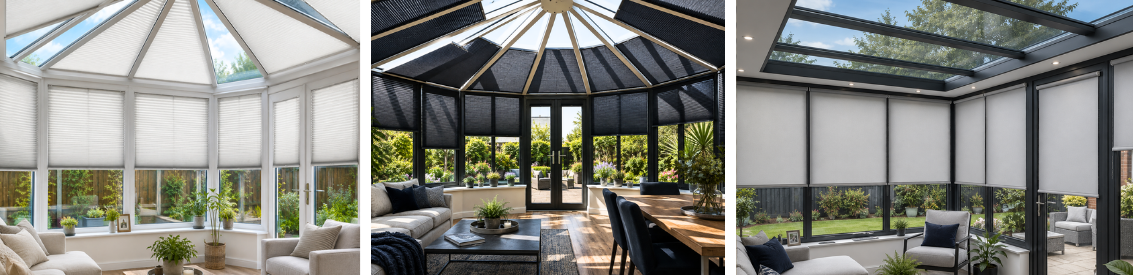
A conservatory overheats because of solar heat gain through the roof glazing, not glare through the side windows, so a standard roller blind fitted only to the vertical glass barely touches the actual problem. Pleated or honeycomb blinds fitted to the roof, ideally in a double-cell thermal fabric, are the fix that addresses where the heat actually enters, with documented reductions in window heat transfer in the region of 25 to 40 percent depending on cell structure.
- Key numbers: single-cell honeycomb fabric typically cuts window heat loss by around 18 percent, double-cell by around 30 to 40 percent · a standard double-glazed window sits around R-0.26, roughly a tenth as insulating as a typical wall · windows account for an estimated 10 to 25 percent of a home’s heating and cooling load · a 3mm gap left between an honeycomb blind and the frame can measurably reduce its insulating performance.
Why Conservatories Overheat: The Actual Mechanism
A conservatory has a far higher ratio of glazed surface area to floor area than any other room in a typical house, including a glass or polycarbonate roof that no other room has. Sunlight passes through that glazing as short-wave radiation, is absorbed by the furniture, floor and walls inside, and re-radiates as long-wave heat, which glass is comparatively poor at letting back out. This is the same greenhouse effect that heats an actual greenhouse, and the roof is doing the majority of the damage, because it receives direct overhead sun for far more of the day than any vertical window does and covers a much larger proportion of the room’s total surface area facing the sky.
Why a Standard Roller Blind on the Side Windows Barely Helps
A single layer of roller fabric on the vertical windows genuinely reduces glare and adds privacy, both real and useful benefits, but it does nothing for the roof, which is where most of the solar heat gain actually happens, and a single non-reflective fabric layer doesn’t meaningfully block radiant heat regardless of which surface it’s fitted to. This explains a pattern we hear often: customers report their conservatory blinds ‘work’ for glare while the room is still unbearable by early afternoon. The blind did exactly what it was designed to do. It simply wasn’t addressing the surface responsible for the temperature problem.
The Physics in Real Numbers: R-Value and Heat Transfer
R-value measures a material’s resistance to heat flow; the higher the number, the better the insulation. A typical double-glazed window sits at roughly R-0.26, compared with a well-insulated wall that can sit well into the double digits, which is why windows are consistently the weakest point in a home’s thermal envelope and can account for an estimated 10 to 25 percent of total heating and cooling energy use. Honeycomb or cellular blinds work by trapping a layer of still air inside sealed hexagonal cells, and still air is a genuinely excellent insulator: a 20mm pocket of trapped air alone carries a meaningful R-value contribution. Independent testing consistently shows single-cell honeycomb fabric reducing heat transfer through a window by around 18 percent, and double-cell configurations reaching 30 to 40 percent, because the second layer of cells adds a further sealed air gap rather than simply doubling the fabric.
Installation quality materially affects these figures. A blind that isn’t fitted flush to the frame, leaving even a few millimetres of gap, allows convective air movement that undermines the sealed-cell principle the whole system depends on. This is a genuine reason to have conservatory roof blinds professionally measured and fitted rather than treated as an off-the-shelf DIY job.
Suitability Matrix: What Actually Reduces Conservatory Heat
| Fix | Addresses roof heat gain? | Typical heat-loss/gain reduction | Best for |
| Standard roller blind, side windows only | No | Minimal, glare and privacy only | Glare control and privacy where heat is not the primary complaint |
| Pleated roof blind, single layer | Yes, directly on the roof glazing | Meaningful reduction in direct solar gain before it enters the room | Conservatories used occasionally, north or east facing rooms |
| Honeycomb/cellular roof blind, single cell | Yes | Around 18% reduction in window heat transfer | Moderate summer use, a reasonable balance of cost and performance |
| Honeycomb/cellular roof blind, double cell | Yes, most effectively | Around 30 to 40% reduction in window heat transfer | South or west facing conservatories used daily through summer |
| Reflective/solar control coated fabric, roof | Yes, reflects radiation before conversion to heat | Meaningful reduction in solar gain, best paired with roof coverage | Rooms wanting to retain some daylight while cutting peak heat |
Who This Isn’t For
If your conservatory is only used occasionally, faces north or east and rarely sees direct overhead sun, or is already shaded by a mature tree or an adjoining building, the cost of double-cell honeycomb roof blinds may not be justified. A good thermal fabric on the vertical windows alone, or even a well-specified single-cell roof blind, may be entirely sufficient. We’d rather quote you accurately for what the room needs than recommend the premium fit as a default for every conservatory regardless of orientation and use.
Real Scenario: A South-Facing Conservatory in Romford Used as a Home Office
A customer in Romford working from a south-facing conservatory through summer reported the room becoming unusable by early afternoon despite a roller blind fitted to every vertical window. The roof, uncovered, was doing the damage. Fitting double-cell honeycomb blinds to the roof glazing bars, alongside keeping the existing vertical roller blinds for privacy and glare, brought the room back to a usable working temperature through the hottest part of the day, addressing the surface that was actually driving the heat gain rather than adding further coverage to windows that were never the source of the problem.
Real Scenario: An Occasionally-Used North-Facing Conservatory in Ilford
Not every conservatory needs the full roof treatment. For one customer in Ilford, a north-facing conservatory used mainly for storage and the odd weekend breakfast, with minimal direct sun at any time of day, coped adequately with a good thermal fabric on the vertical windows alone and no roof coverage at all. The honest recommendation here was the cheaper option, because the room’s orientation meant the roof was never the dominant heat source in the first place.
What We’d Specify, Room by Room
A south or west-facing conservatory used daily through summer needs pleated or honeycomb roof blinds as the priority, ideally in a double-cell thermal fabric, with vertical windows in a complementary thermal or blackout fabric if the room also functions as a bedroom or home office. A conservatory used only occasionally, or one that’s north or east-facing with limited direct sun, may cope adequately with a good thermal fabric on the vertical windows alone. We confirm which category a specific room falls into at the measuring visit, including situations where the honest answer is that a cheaper specification will do the job.
Cost: Roof Coverage vs Replacing the Glazing
Replacing conservatory glazing with tinted or solar-control glass genuinely helps and the two approaches aren’t mutually exclusive, but reglazing is a significantly larger job and cost than fitting roof blinds, typically running into thousands of pounds for a full conservatory roof versus a fraction of that for pleated or honeycomb roof blinds measured and fitted. Most customers get a bigger, faster improvement in usable comfort from roof blinds than from a glazing upgrade, which is why we’d generally recommend trying blinds first and reserving reglazing for cases where blinds alone still leave the room unusable.
Mistakes People Make Buying Conservatory Blinds
- Fitting blinds only to the side windows and expecting the heat problem to go away: the roof is almost always the dominant source of solar gain in a conservatory, and side-window coverage alone rarely solves a genuine overheating complaint.
- Choosing single-cell fabric on a south-facing roof purely to save money: the difference between single and double-cell performance is large enough, roughly 18 percent versus 30 to 40 percent heat reduction, that it’s worth checking the orientation before defaulting to the cheaper option.
- Leaving gaps at the frame during a DIY fit: even a small gap of a few millimetres between an honeycomb blind and the frame allows convective air movement that undermines the sealed-cell insulating principle.
- Assuming reflective glass alone will fix an existing overheating problem: retrofitting solar-control film or glass helps but rarely matches the heat reduction achievable with properly fitted roof blinds, at a fraction of the cost.
Pleated vs Honeycomb vs Reflective Roof Blinds: Which to Choose
| Type | How it works | Typical performance | Best for |
| Pleated, single layer | Reduces direct solar transmission through fabric density | Moderate; good baseline improvement | Occasional use conservatories, tighter budgets |
| Honeycomb, single cell | Traps one sealed layer of still air as insulation | Around 18% reduction in heat transfer | Moderate daily use, balanced cost and performance |
| Honeycomb, double cell | Two sealed air layers for compounded insulation | Around 30 to 40% reduction in heat transfer | Heavy daily use, south or west facing rooms |
| Reflective/solar control coated | Reflects radiant heat before it converts inside the room | Strong reduction in peak solar gain, retains more daylight | Rooms wanting brightness with less heat, paired with roof coverage |
How Long Do Conservatory Roof Blinds Last?
Pleated and honeycomb fabrics used in roof applications are generally specified for UV resistance given their direct sun exposure, and with correct fitting typically perform reliably for many years before any noticeable fade or fabric fatigue. The mechanical components, tracks and glazing-bar fixings, usually outlast the fabric. Because roof blinds run on a track system fixed directly to the glazing bars, getting the fit and tension right at installation matters for both long-term appearance and how well the insulating effect performs, which is why we measure and fit these ourselves rather than treating them as a supply-only product.
Conservatory Heat Myths Worth Retiring
Myth: any roller blind on the windows will cool a hot conservatory.
Fact: the roof, not the vertical glass, is almost always the dominant source of solar heat gain in a conservatory, so window-only coverage rarely resolves a genuine overheating complaint.
Myth: thermal blinds only matter in winter.
Fact: the same trapped-air principle that keeps heat in during winter keeps solar heat out in summer, which is why a single honeycomb specification earns its cost across the whole year rather than one season.
Myth: darker glazing or dark-coloured blinds cool a room faster.
Fact: darker fabrics generally have lower solar reflectance and higher solar absorptance, meaning they absorb more heat and can radiate it back into the room; lighter, reflective fabrics are usually the better choice for heat control specifically.
Our Verdict
For a conservatory that genuinely overheats, roof coverage comes first and vertical windows come second. A roller blind on the side windows alone, however well specified, is addressing the wrong surface. Where budget allows, double-cell honeycomb roof blinds on a south or west-facing conservatory make the single biggest difference of any single change we specify in this category, and we say so even when a cheaper option would earn us a smaller sale.
Conservatory Blinds FAQ
Q: Will tinted or solar-control glass fix an overheating conservatory instead of blinds?
A: It helps, and the two approaches aren’t mutually exclusive, but reglazing a conservatory roof is a significantly larger job and cost than fitting roof blinds. Most customers see a bigger, faster improvement in usable comfort from properly specified roof blinds.
Q: Do thermal blinds actually make a noticeable difference, or is it marketing?
A: The honeycomb air-gap principle is established building physics, the same idea behind double glazing and loft insulation applied at window scale. Documented reductions in window heat transfer of 18 to 40 percent, depending on single or double-cell construction, are genuine and measurable, though they won’t turn a poorly insulated conservatory roof into an air-conditioned room.
Q: Can I fit conservatory roof blinds myself?
A: Roof blinds run on a track system fixed to the glazing bars, and getting the fit and tension right matters for both appearance and insulating performance, since even a small gap at the frame undermines the sealed-cell principle. We measure and fit these as part of our standard service across East London and the wider London and Essex area.
Q: What about the roller blinds we already have on the side windows?
A: Keep them. Existing roller blinds are doing a genuinely useful job for glare and privacy on the vertical glass. Add proper roof coverage as the fix for the actual temperature problem, rather than replacing what’s already working.
Q: Does the colour of conservatory roof blinds affect how much heat they block?
A: Yes, to a meaningful degree. Lighter, more reflective fabrics generally have higher solar reflectance and lower solar absorptance, meaning they reflect more heat away rather than absorbing and re-radiating it into the room, which makes colour a genuine part of the heat-control specification, not just an aesthetic choice.
Q: Is single-cell or double-cell honeycomb better for a conservatory roof?
A: Double-cell performs meaningfully better, in the region of 30 to 40 percent heat-transfer reduction versus around 18 percent for single-cell, and is the better choice for south or west-facing conservatories used daily through summer. Single-cell remains a reasonable, more affordable option for occasional-use or less exposed rooms.
Q: How much extra do double-cell honeycomb roof blinds cost over single-cell?
A: Double-cell fabric typically costs a genuine premium over single-cell, reflecting the extra layer of construction, though the actual figure depends on roof size and fabric choice. We quote both specifications side by side at the measuring visit so you can weigh the performance difference against the cost.
Q: Will roof blinds make the conservatory darker even when I don’t want heat control?
A: Most pleated and honeycomb systems can be raised fully to stack neatly at the ridge or eaves, giving you a clear roof view when heat isn’t a concern, with the option to close them during peak sun. This flexibility is one of the advantages over a fixed solar-control glazing upgrade.