
Are Motorised Blinds Worth It in 2026? An Honest Answer
Motorised blinds are genuinely worth the extra cost on hard-to-reach windows, blackout bedrooms wanting a schedule, nurseries, and large or heavy blinds that are awkward to operate by hand. They are not worth it on a small, easily reached kitchen window adjusted a couple of times a year. Most motorised blinds today use rechargeable battery motors needing no electrician and no wiring, with a typical charge lasting several months of normal daily use.
What You Can Motorise
| Blind type | Typical motorisation demand | Why it suits motorisation |
|---|---|---|
| Roller blinds | High most commonly motorised type | Simple mechanism to motorise; ideal for scheduled blackout |
| Roman blinds | Moderate | Removes the effort of raising a heavy, wide fabric blind by hand |
| Day and night blinds | Moderate | Fine stripe-alignment control from a remote or app rather than a cord |
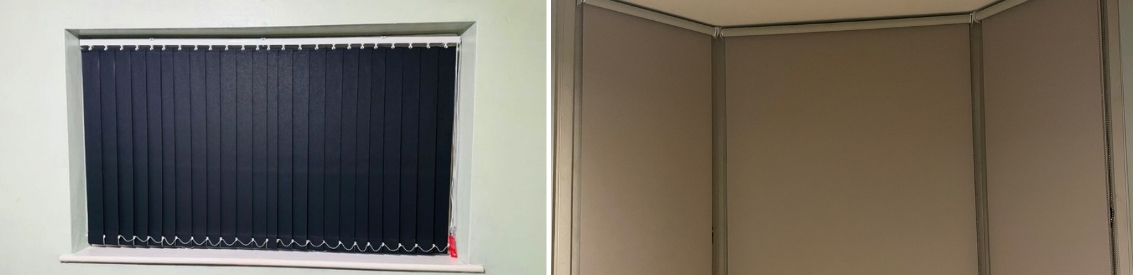
| Vertical blinds | Moderate, especially wide installations | Smooth, even operation across a wide span without manual cord pulling |
| Velux / roof window blinds | High often the strongest case for motorisation | Removes the need for a pole on windows that are physically out of reach |
How Motorised Blinds Are Powered
Most motorised blinds fitted today use quiet, rechargeable battery motors, which need no electrician and no cables chased into the wall. Charging is a straightforward plug-in with the supplied cable, similar in principle to charging a phone, and under typical daily use a single charge commonly lasts in the region of three to six months before the motor needs topping up, with most systems giving a low-battery warning through the app or a light indicator before it actually runs out. Mains-powered motors are also available for those who prefer a permanent wired connection, generally at a similar or slightly lower unit cost but requiring an electrician for the initial installation.
Control Options: Remote, App, Voice and Schedule
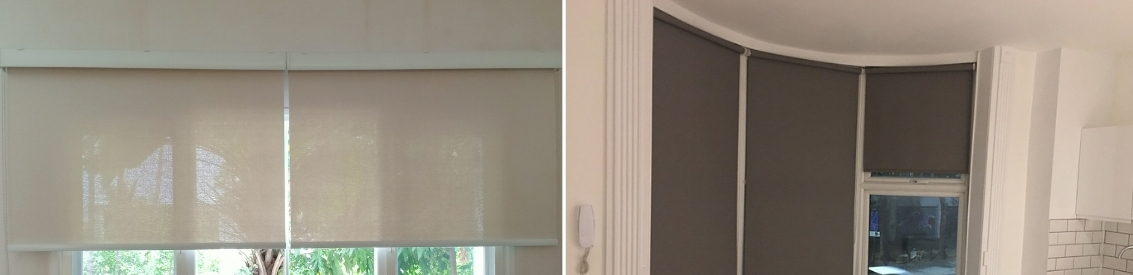
Control runs from a simple handheld remote, the baseline included as standard with most motorised blinds, through to wall-mounted switches, smartphone app control via a compatible hub, and scheduled automation that opens or closes blinds at set times without any manual input at all. Many motor systems can also connect to Alexa or Google Home through a compatible hub, though compatibility varies meaningfully between motor manufacturers and should be confirmed for your specific setup before ordering rather than assumed from general marketing claims.
Suitability Matrix: Where Motorisation Genuinely Earns Its Cost
| Situation | Worth motorising? | Why | Better alternative if not |
|---|---|---|---|
| Velux or roof window, out of reach | Yes, strongly | Removes reliance on a pole for a window that’s physically awkward to operate manually | N/A – this is close to the clearest case for motorisation |
| Blackout bedroom, wants scheduled darkness | Yes | Automated closing at night and opening with an alarm genuinely improves sleep routine for many households | Standard blackout blind with side channels, manually operated |
| Nursery or young child’s room | Yes | Removes cord hazard entirely and allows operation without reaching over a cot | Fully cordless manual blind, a lower-cost alternative that still removes the cord |
| Small kitchen window, adjusted twice a year | No | A standard chain-operated blind does the same job for meaningfully less money | Standard chain or cordless blind |
| Large, heavy Roman blind on a wide window | Yes | Manual operation of a wide, heavy fabric blind is genuinely awkward; a motor removes the physical effort | N/A – weight makes this a strong case regardless of reach |
| Rented flat, short-term tenancy | Usually no | Motorised systems are a bigger investment that suits longer-term ownership better than a short let | Perfect fit or standard cordless blinds |
When Motorisation Is Not Worth the Extra Cost
We would rather tell you this now than after you’ve paid for it. A small, easily reached kitchen window that you adjust twice a year does the same job with a standard chain-operated blind, for meaningfully less money and with one less device to charge. Motorisation earns its cost on hard-to-reach windows, blackout bedrooms wanting a schedule, large or heavy blinds, and any room where cords are a genuine safety concern. At the free measuring visit, we tell you room by room where a motor makes sense and where it’s an unnecessary cost, even where that means quoting less than a customer initially expected to pay.
What Motorised Blinds Actually Cost
Pricing depends on blind type, size and motor system, so we quote after measuring rather than offering a generic figure that won’t match your actual windows. As a general shape, motorisation adds a fixed premium per blind on top of the equivalent made-to-measure manual price, and that premium tends to matter proportionally less on larger or heavier blinds where the manual alternative was already a genuinely two-handed job.
Real Scenario: A Loft Bedroom in a Barking Conversion With an Out-of-Reach Velux Window
A loft conversion bedroom with a Velux roof window positioned above head height, previously operated with a long pole that was awkward and occasionally left half-open because reaching it properly took effort. A motorised blackout Velux blind, controlled by a small remote kept on the bedside table, removed the daily friction entirely and, paired with a schedule, now closes automatically each evening without anyone needing to remember.
Real Scenario: A Small Utility Room Window in a Hornchurch House
A customer initially asked for motorised blinds throughout the house, including a small, easily reached utility room window adjusted perhaps twice a year for direct summer sun. Here the honest recommendation was a standard chain-operated blind for that specific window, since the window’s low usage frequency and easy reach meant motorisation added cost without adding any meaningful daily benefit, while the bedroom and loft windows in the same order genuinely justified the upgrade.
Mistakes People Make With Motorised Blinds
- Motorising every window in the house regardless of actual benefit: the cost adds up quickly and the convenience gain on an easily reached, rarely adjusted window is minimal compared with a hard-to-reach or high-use window.
- Assuming all motor systems work with Alexa or Google Home without checking: compatibility genuinely varies between manufacturers and hub systems, and should be confirmed for your specific setup before ordering, not assumed.
- Choosing mains power without factoring in the electrician cost: battery motors avoid this entirely for most domestic situations, and the wiring cost for mains power can outweigh any saving on the motor unit itself.
- Forgetting to plan for charging access: a motorised blind on a very high or awkward window still needs occasional access to charge the battery, worth thinking through at the specification stage rather than after fitting.
Motorised vs Manual vs Cordless Manual: Full Comparison
| Factor | Standard corded manual | Cordless manual | Motorised |
|---|---|---|---|
| Typical relative cost | Lowest | Small premium over corded | Largest premium, offset by convenience and safety |
| Ease on hard-to-reach windows | Poor without a pole | Poor without a pole | Excellent – the primary use case |
| Cord safety | Compliant with breakaway device | No cord present | No cord present |
| Scheduling / automation | None | None | Yes, via app or timer |
| Best for | Easily reached, low-use windows | Any room, particularly on a budget wanting cord-free safety | Hard-to-reach windows, blackout bedrooms, nurseries, heavy blinds |
What Happens If a Motor Develops a Fault
Motors are reliable and covered by guarantee, and genuine failures are uncommon in normal domestic use. Because London Blinds 4U is a local, Dagenham-based company, if anything does need attention we return and address it directly rather than routing you through a national call centre, which is a meaningful difference from ordering a motorised system online without a local installer behind it.
Motorised Blinds Myths Worth Retiring
Myth: motorised blinds always need an electrician. Fact: the great majority of domestic motorised blinds today use rechargeable battery motors needing no wiring at all; mains power exists as an option, not a requirement.
Myth: the battery needs charging every week or two. Fact: typical daily use gives a charge lasting in the region of three to six months, which is a low-frequency maintenance task rather than a constant chore.
Myth: motorisation is purely a luxury feature with no practical justification. Fact: on hard-to-reach windows and in nurseries specifically, motorisation solves a genuine practical and safety problem, not just a convenience preference.
Lower Cost Alternatives to Full Motorisation
Full motorisation is not the only way to reduce the physical effort of operating a hard-to-reach or heavy blind, and it’s worth naming the genuine middle-ground alternatives rather than presenting motorisation as the only upgrade path from a standard chain blind. A telescopic extension pole, used with a standard chain or wand-operated blind, solves the reach problem on a moderately high window for a fraction of the cost of a motor, though it doesn’t offer scheduling or app control. Spring-assisted or counterbalanced mechanisms, common on larger Roman and some roller blinds, reduce the physical effort of lifting a heavy fabric blind without adding a powered motor at all, addressing the weight problem specifically rather than the reach problem. For households wanting some of the convenience of scheduling without the full cost of motorising every blind, motorising only the one or two windows that genuinely justify it, the main bedroom and a hard-to-reach roof window, say, while leaving the rest on standard manual operation, is itself a valid middle path rather than an all-or-nothing choice.
Motorised vs Manual Blinds: The Cost Over Time
Comparing motorised and manual purely on the upfront quote misses part of the picture. A motorised blind’s ongoing cost is close to zero beyond the initial purchase, since rechargeable battery motors need no electricity supply beyond an occasional plug-in charge lasting months, and a well-made motor system typically performs reliably for many years before needing any component replacement. Set against that near-zero ongoing cost is the upfront premium itself, which needs to be weighed against how many times a year the convenience or safety benefit is actually realised. For a Velux blind operated daily and previously requiring an awkward pole reach, the upfront premium is earning its keep every single day. For a rarely adjusted window, the same premium is being paid for a convenience that’s used only a handful of times a year, which is precisely the arithmetic behind the room-by-room recommendation running through this article rather than a blanket answer either way.
Three Common Concerns About Motorised Blinds
The first objection we hear most often is reliability: will the motor still work in five or ten years? Modern battery motor systems from established manufacturers are a mature, well-tested technology at this point, and genuine failures in normal domestic use are uncommon; where they do occur, a local installer able to return and address the issue directly, rather than routing a repair through an online retailer’s distant support queue, makes a meaningful practical difference. The second objection is cost relative to benefit, addressed directly in the suitability matrix and cost arithmetic above: motorisation is not universally worth it, and we say so plainly rather than defaulting to an upsell. The third objection is complexity, a worry that a motorised system will be fiddly or unreliable to actually use day to day. In practice, the basic remote control included as standard with every motorised blind operates as simply as pressing a button, with app and voice control available as an optional additional layer for households that want it, rather than a requirement to get any benefit from the upgrade at all.
We provide free measuring and fitting for motorised blinds across East London, North London, South London and West London, with advice given room by room so you only pay for motorisation where it adds a practical benefit.
Our Verdict
Motorise the windows that are genuinely hard to reach, the blackout bedroom you want on a schedule, the nursery, and any large or heavy blind that’s a two-handed job by hand. Leave the small, easily reached, rarely adjusted windows on standard manual operation and save the money, or consider a telescopic pole or spring-assisted mechanism as a lower-cost middle ground where reach or weight, rather than scheduling, is the actual problem. This is the recommendation we give at almost every measuring visit, and it usually means quoting a mixed specification within the same house rather than motorising or not motorising the whole order uniformly.
Motorised Blinds FAQ
Q: Do motorised blinds need an electrician?
A: Usually not. Rechargeable battery motors are the standard choice for most domestic installations and need no wiring. Mains-powered options exist for those who specifically want them, requiring an electrician for the initial fit.
Q: How long does the battery last between charges?
A: With typical daily use, in the region of three to six months, depending on how often the blind is operated. Charging is a simple plug-in with the supplied cable, and most systems give a low-battery warning before it actually runs out.
Q: Can I control motorised blinds from my phone?
A: Yes, with an app-enabled hub, which lets you group blinds by room, set schedules, and operate them remotely when away from home. A basic handheld remote is included as standard if you’d rather keep things simple.
Q: Do motorised blinds work with Alexa or Google Home?
A: Many motor systems connect to voice assistants through a compatible hub, though compatibility varies by manufacturer. Confirm what you use at the consultation and we’ll verify compatibility before you order, rather than after.
Q: Are motorised blinds safe for children’s rooms?
A: They’re the safest available option, since there are no cords or chains at all. We recommend them regularly for nurseries, usually paired with a blackout fabric, for exactly this reason.
Q: What happens if the motor develops a fault?
A: Motors are reliable and covered by guarantee. As a local Dagenham-based company, we return and address any issue directly rather than routing you through a distant call centre.
Q: Can you motorise a blind I already own?
A: Sometimes, depending on the blind and headrail, though it’s usually better value to fit a purpose-built motorised blind from new. Bring it up at the free measuring visit and we’ll give you a straight answer either way.
Q: Is motorisation worth it for a small kitchen window I barely adjust?
A: Generally no. A small, easily reached window adjusted only a couple of times a year does the same job with a standard chain-operated blind for meaningfully less money. Motorisation earns its cost on hard-to-reach, high-use or heavy windows specifically.