
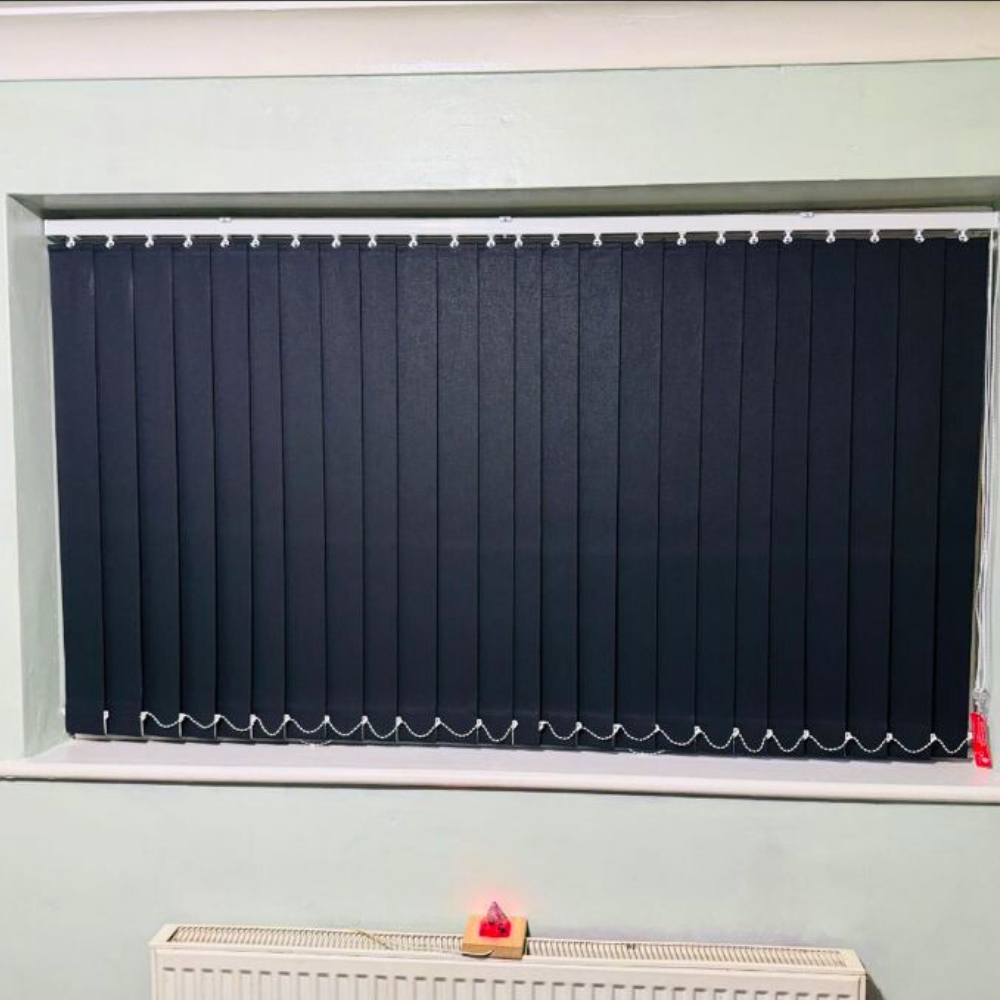
How to Clean Vertical Blinds Without Fading, Twisting or Breaking the Chain
Here’s the short version. Dust or vacuum PVC and fabric slats every week with a soft brush attachment. Wipe PVC slats with a damp cloth when they need more than a dust, and take fabric slats off the headrail to hand wash them in a bowl rather than a washing machine. Rehang each slat with its own weight, in the right order. Turn south-facing slats round every few months so one side doesn’t take all the sun. Done this way, a set of vertical blinds should last for years without the chain sticking or the slats bowing.
How often should you clean vertical blinds?
Not often.
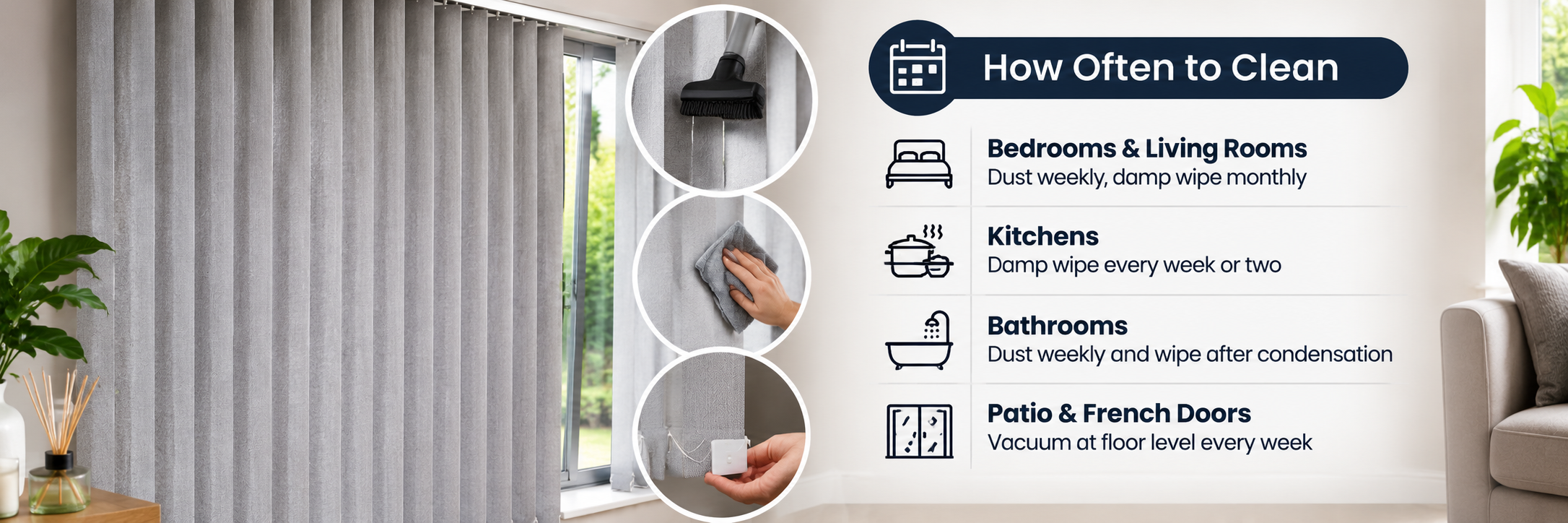
Most rooms only need a weekly once-over with a vacuum nozzle or a soft duster, run down each slat from top to bottom. Kitchens, bathrooms and patio doors need more attention, because grease, steam and outdoor grit settle on the slats faster than they do on a living room window.
- Bedrooms and living rooms: a quick dust or vacuum once a week, a damp wipe once a month.
- Kitchens: a damp wipe every week or two, since cooking fumes leave a slightly sticky film on PVC and fabric alike.
- Bathrooms: a dust every week and a wipe as soon as you see condensation marks, before they turn into mould.
- Patio doors and french doors: a vacuum at floor level every week, because these slats pick up grit from shoes and pets that a normal window never sees.
How to clean fabric vertical blinds safely
Fabric vertical slats come off the headrail without tools. Unclip the weight at the bottom of each slat. Then slide the slat sideways out of its carrier at the top. Keep the slats in order as they come down. Even a small difference in weight or length between slats can throw the whole set off once it’s back up.
- Lay each slat flat and vacuum both sides first to lift loose dust before any water touches it.
- Fill a bath or a large bowl with cool to lukewarm water and a small amount of mild detergent. Avoid hot water.
- Sponge the fabric gently rather than scrubbing or wringing it, working along the slat rather than across it.
- Rinse in clean, cool water and press out the excess with a towel. Don’t twist the slat.
- Hang the slat back up or lay it flat to dry fully before it goes back on the carrier.
Can you machine wash vertical blinds? No. A washing machine’s spin cycle twists and creases fabric slats out of shape, and most won’t hang straight again afterwards. Many fabric vertical slats also carry a fire-retardant coating, and hot water, a long soak or a tumble dryer can affect that coating over time, so keep the water cool and the cleaning gentle. Dry cleaning is possible for heavily soiled slats, but it’s rarely needed if you vacuum weekly and hand wash when marks appear. If you’re still weighing up fabric against PVC before you buy, our vertical blinds buying guide covers how each material behaves day to day.
Wiping down PVC vertical blinds in place
PVC vertical slats can usually be cleaned without coming off the headrail. That’s the main reason many kitchens and bathrooms get PVC rather than fabric. Run a soft duster or a vacuum brush down each slat first to lift dust. Then wipe with a cloth that’s damp rather than wet, using a drop of washing-up liquid in warm water for anything greasy.
- Wipe downward in one motion rather than scrubbing back and forth, which can push grime into the seams between slats.
- Dry each slat with a second cloth so water doesn’t sit in the headrail carriers and cause them to stiffen.
- Check the bottom edge of each slat, where dust tends to collect on the little weight pocket.
Why do vertical blinds keep twisting after cleaning?
Nearly always, it’s the weights.
Vertical blinds start twisting after a clean because the slats went back on in the wrong order, with the wrong weight, or with a weight missing. Each slat has its own weight sized for that slat’s length, and some sets have slightly different weights at the two ends of the run to balance how the slats stack. Swap two weights, or clip a weight back on upside down, and that one slat hangs a fraction off true. Multiply that across eight or ten slats and the whole blind looks crooked, and starts to rotate on the chain instead of sliding cleanly.
Label the slats first. A strip of masking tape, numbered 1 to however many you have, stuck to the top of each slat where it won’t show once it’s hung, is enough. Put the weights back in the same slat they came from, clipped the same way round, and rehang in the same order, working from one end of the headrail to the other rather than jumping around. If a weight is cracked or missing after a wash, that slat is the one that will keep twisting until it’s replaced, not the whole set.
Patio-door blinds: dealing with dust, grit and damp
Vertical blinds on patio and french doors do a different job to the ones on a normal window, because they sit at floor level where feet, shoes and pets brush past them every day. Grit tracked in from outside settles into the bottom weight pockets and the track the chain runs along, which is why patio-door slats often need a proper vacuum weekly rather than the occasional dust a bedroom window gets away with.
- Vacuum the bottom third of each slat and the floor track more often than the rest of the run.
- Check the headrail and bottom chain for grit build-up, since a gritty chain is what makes the whole thing feel stiff to pull.
- Wipe condensation off the slats nearest the door as soon as you see it, particularly in a kitchen diner with patio doors, since damp sitting on fabric or PVC for days is what lets mould start.
To remove mould from blinds once it’s taken hold, sponge the affected area with warm water and a small amount of mild detergent, rinse, and dry the slat fully in the air rather than putting it back up damp. For a dark mark that won’t lift, a diluted solution of one part white vinegar to four parts water on a cloth can help on both PVC and fabric, tested on a hidden part of the slat first. If you’re weighing up whether vertical blinds are the right fit for a patio or bifold door in the first place, our guide to vertical blinds for patio doors and large windows covers the stacking space and door type in more detail.
Why south-facing vertical blinds keep fading
Vertical blinds fade or turn yellow because UV light breaks down the dye and the fabric or PVC coating over time, the same way curtains do. South-facing windows get the most direct sun through the middle of the day. The slats facing that light fade noticeably faster than the ones at either end of the run, and faster than the back of the same slat, which stays pale and bright. That uneven fading is usually what people notice first. Not a general dulling of the whole set, just one side gone pale while the rest still looks newer.
Turn each slat round, back to front, every few months. The side that’s been facing the glass gets a rest, and the other side takes its turn in the sun. Vertical slats clip onto their carrier the same way whichever side faces out, so a full set takes a few minutes to turn. Do it a couple of times a year and the fading spreads evenly across both sides, rather than leaving one face looking tired while the other still looks new. It won’t stop fading for good. No slat sits in direct sun forever without some colour loss. But it buys a lot more even wear out of a south-facing set before anyone notices.
Looking after the vertical blind chain, weights and gliders
A vertical blind chain usually starts sticking because of dust and grit inside the gliders, not a fault with the chain itself. Gliders are the small plastic pieces that run along the headrail track. Wipe the track with a dry or barely damp cloth every few months. Follow with a trace of silicone spray on the gliders, not an oil-based lubricant, and the chain keeps moving freely without pulling in more dust.
- Never pull the chain hard if it jams. Check first for a twisted slat or a glider that’s come off its track rather than forcing it.
- Keep the chain and wand tensioned at the bottom, since a loose or detached tension device is one of the most common reasons a chain starts to hang unevenly.
- Replace a cracked weight rather than leaving it, since a missing or broken weight is what lets one slat swing and tangle the chain.
Is it safe to remove the safety clip on a blind chain? No, the safety clip and tension device should stay fitted at all times. This matters for the safety of anyone in the home, especially children. Our guide to blind cord safety rules in the UK sets out exactly why that fitting has to stay in place and what the rules require.
Sometimes a clean turns up a part that’s actually broken. A weight, a glider, a snapped chain. That’s usually the end of what cleaning alone can fix. You’re welcome to get in touch for a free, no-obligation quote on a replacement rather than living with a blind that won’t hang straight.