
Fabric Openness Factor Explained: What 1%, 3%, 5% and 10% Actually Look Like
Openness factor is the percentage of a blind fabric’s surface made up of tiny perforations, and it is the single number that determines how much daylight, glare and outward view you get. A 1% openness fabric blocks almost all direct light and view, a 5% fabric is the most common all-round choice balancing glare control with a usable view out, and a 10%+ fabric behaves closer to a net curtain, letting in plenty of light with only partial privacy. A 0% fabric is true blackout, with no perforations at all.
- Key numbers: 0% openness = true blackout · 1-3% = strong glare and heat control, muted view · 5% = the most common balanced choice · 10%+ = clear view, minimal heat or privacy control · a 5% openness fabric typically cuts around 90% of direct solar heat transmission through the fabric itself, versus roughly 85% for a 10% fabric.
What Openness Factor Actually Measures
Openness factor, sometimes called the openness coefficient, is the percentage of a fabric’s total surface area made up of perforations rather than solid weave. A fabric quoted at 5% openness has 5% of its surface as tiny holes and 95% as solid material. This single number governs three things at once: how much direct light passes through, how clear the view out remains, and, for the same reason, how much privacy you get looking in from outside, particularly during daylight hours when it’s brighter outside than in.
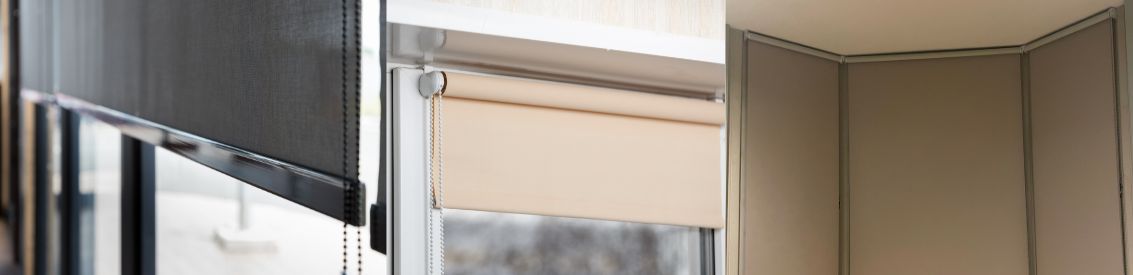
Openness Factor at Each Level: What It Actually Looks Like
| Openness factor | Light transmission | View out | Daytime privacy | Typical use |
|---|---|---|---|---|
| 0% (blackout) | Essentially none through the fabric | None | Total | Bedrooms, nurseries and home cinemas |
| 1% to 3% | Low, softened daylight | Shapes and movement rather than detail | Strong | South-facing living rooms, home offices and screen-glare rooms |
| 5% | Moderate, with good natural light | Reasonably clear in daylight | Good by day, reduced at night | Balanced choice for most rooms |
| 10% or higher | High, close to unobstructed daylight | Clear | Minimal | Rooms where view matters more than privacy |
Why the Same Openness Factor Can Feel Different: Hole Size and Pattern
Two fabrics can share an identical 5% openness figure and still behave differently depending on how that 5% is distributed. A fabric with fewer, larger perforations tends to create more noticeable glare hotspots and a more pixelated, less even view through, while a fabric with the same total open area spread across many microscopic perforations diffuses incoming light more evenly, producing a softer, more comfortable result at a workstation or a television. This is why we always recommend seeing and holding a physical sample against your actual window rather than choosing on the openness number alone.
How Colour Interacts With Openness Factor
Colour and openness factor work together, not separately, and understanding this pairing is where most people choosing fabric by spec sheet alone go wrong. A darker fabric at a given openness factor cuts glare more sharply and gives a crisper, higher-contrast view outward, because your eye is drawn to the brighter world beyond the fabric, but darker colours also have lower solar reflectance and higher solar absorptance, meaning they absorb more heat and can re-radiate some of it into the room. A lighter fabric at the same openness factor reflects more solar heat away before it converts inside the room, making it the stronger choice specifically for heat control on a hot, sun-facing window, at some cost to view clarity and glare-cutting sharpness.
Openness Factor and Solar Heat: The Numbers That Matter for a Sunny Room
Beyond light and privacy, openness factor materially affects how much solar heat a fabric lets through. A lower openness factor generally correlates with a higher proportion of solar energy reflected or absorbed by the fabric rather than transmitted straight through into the room, with a 5% openness fabric typically blocking in the region of 90% of direct solar heat transmission and a 10% fabric closer to 85%. For a west-facing room that bakes in the late afternoon, this gap is meaningful enough to be worth specifying deliberately rather than choosing purely on view-through preference.
Suitability Matrix: Choosing the Right Openness Factor by Room
| Room or situation | Recommended openness factor | Why | Who this is wrong for |
|---|---|---|---|
| Home office with screen glare | 1% to 3% | Cuts glare while retaining daylight | Rooms where a strong outward view is the main priority |
| Standard living room with moderate sun | 5% | Balanced privacy, view and heat control | Rooms with intense unshaded afternoon sun |
| North-facing room with limited direct sun | 5% to 10% | A clearer view can take priority | South-facing or west-facing rooms with strong sun |
| South-facing or west-facing room | 1% to 3% in a pale colour | Strong glare reduction with better reflectance | Rooms prioritising maximum outward visibility |
| Bedroom needing genuine darkness | 0% true blackout | Any openness above 0% admits some light | Anyone wanting a view through the closed blind |
When a Single Fixed-Openness Fabric Is Not Enough
If you want a single blind that gives both a genuinely clear view out during the day and true blackout at night, no single fixed-openness fabric will do both; that is a contradiction in the fabric’s own physics, not a gap in the market. The honest fix, covered elsewhere on our site, is a dual-layer system like a day and night blind, which combines a sheer and a solid layer in one blind specifically to give you both settings, rather than compromising on a single mid-range openness factor and getting neither properly.
Real Scenario: A Home Office in a Stratford New-Build With Constant Screen Glare
A customer working from home in a new-build flat with floor-to-ceiling glass reported persistent afternoon screen glare on video calls despite an existing 10% openness roller blind. The fabric was simply too open for the job. Moving to a 2% openness fabric in a mid-grey tone cut the glare sharply while still allowing enough ambient daylight to avoid the room feeling closed off, which a full blackout fabric would have done unnecessarily for a room used during daylight hours.
Real Scenario: A South-Facing Living Room in Romford That Felt Like a Greenhouse by 3pm
A living room with a large south-facing window and an existing pale-coloured 10% openness fabric was letting in comfortable light but doing very little for the afternoon heat build-up. Switching to a 3% openness fabric in a similar pale tone kept most of the room’s brightness while meaningfully improving both glare control and solar heat transmission, illustrating that openness factor and colour can be adjusted together to solve a heat problem without resorting to a much darker or fully opaque fabric.
Mistakes People Make Choosing Openness Factor
- Choosing purely on colour and ignoring the openness number entirely: two fabrics in the same colour can behave completely differently depending on openness factor, and colour alone tells you nothing about glare, heat or privacy performance.
- Assuming a higher openness factor always means more natural light and is therefore always better: more open fabric also means less privacy, less glare control and less heat protection, which is a genuine trade-off, not a straightforward upgrade.
- Expecting daytime privacy performance to hold at night: any openness factor above 0% behaves very differently after dark with interior lights on, since the balance of brightness reverses and outside becomes able to see silhouettes and shapes inside.
- Buying a 1% fabric expecting near-blackout performance: even a 1% openness screen fabric is not a blackout fabric; it still transmits a meaningful amount of light and offers no genuine darkness for sleep-sensitive rooms.
Openness Factor vs Fabric Weight vs Colour: What Each One Actually Controls
| Property | What it primarily controls | Common misconception |
|---|---|---|
| Openness factor | Light transmission, view, privacy, glare and solar transmission | That it only describes how see through a fabric looks |
| Fabric colour | Solar reflectance, absorption and view contrast | That colour alone determines privacy |
| Fabric weight or thickness | Durability, drape and light diffusion | That a heavier fabric is automatically more private or blackout |
How to Choose the Right Openness Factor
Start with what the room needs most: glare control, heat control, privacy, or view. If more than one matters equally, 5% openness in a mid-tone colour is the sensible starting point for most rooms and most windows in a typical London home. Bring a fabric sample home and hold it against the actual window at the time of day the room is used most, since a swatch under indoor lighting tells you very little about how it behaves against real afternoon sun. We bring a full range of openness samples to every free measuring visit specifically so this comparison can happen in your own light, not ours.
Openness Factor Myths Worth Retiring
- Myth: a 1% openness fabric is basically blackout. Fact: it still transmits light and is classified as light filtering, not blackout, which requires a 0% openness, fully opaque fabric.
- Myth: openness factor only matters for commercial or office blinds. Fact: the same principle governs every roller, vertical and screen fabric sold for domestic use, even though the term is used more often in commercial specification.
- Myth: a higher price always means a better openness factor for your needs. Fact: openness factor is a specification choice matched to the room’s actual requirement, not a quality tier; a well-made 5% fabric and a well-made 1% fabric simply suit different situations.
Alternatives to a Single Fixed-Openness Fabric
A single roller or vertical blind in one fixed openness factor is not the only route to solving a light and privacy problem, and it’s worth naming the genuine alternatives rather than assuming a fixed-openness fabric is always the answer. Day and night (zebra) blinds combine a sheer and a solid stripe in one blind specifically to give two settings from a single mechanism, which we cover in full in our dedicated guide. Double roller systems, essentially two independent roller blinds on one bracket, a sheer fabric and a blackout or low-openness fabric, achieve a similar dual-mode result with independent control over each layer rather than the aligned-stripe mechanism of a zebra blind. Plantation shutters, adjusted by tilting the louvres rather than choosing a fixed fabric openness at all, offer continuously variable light control at any point between fully open and fully closed, at a materially higher cost than any fabric blind, covered in our shutters versus blinds comparison. None of these three alternatives is automatically the better choice; each solves the same underlying problem, needing different light levels at different times, in a different way and at a different price point.
How Openness Factor Interacts With Fabric Care and Longevity
Fabric openness factor has a secondary effect on how a blind ages that’s rarely mentioned alongside the light and privacy discussion. More open fabrics, with a higher percentage of perforated surface area, tend to show dust and light soiling less obviously than a dense, low-openness weave, simply because there’s proportionally less solid surface for dust to settle visibly on. Conversely, very low openness and blackout fabrics, being denser and more solid, can show dust build-up more visibly over time and may need slightly more frequent light dusting or vacuuming with a soft brush attachment to stay looking fresh, particularly in a bedroom where the blind is closed for long periods. This isn’t a reason to avoid low-openness fabric where you need its light and privacy performance, but it’s a genuine, practical consideration worth knowing about before you choose, rather than discovering after a year of ownership.
Our Verdict
For most rooms in a typical home, 5% openness in a mid-tone colour is the sensible default and the one we recommend most often when a customer has no strong existing preference. Step down to 1-3% for glare-sensitive rooms like home offices, and step up to 10% only where privacy and heat genuinely don’t matter, such as a north-facing room with little passing traffic outside. Where you need both daylight and true privacy at different times of day, look at a dual-layer day and night blind, a double roller system, or shutters with adjustable louvres, rather than compromising on a single mid-range openness fabric that does neither job particularly well.
Fabric Openness Factor FAQ
Q: What openness factor should I choose for a home office?
A: 1 to 3% is the strongest choice for cutting screen glare while still allowing usable daylight into the room, particularly on a monitor-facing or south-facing window.
Q: Is a 5% openness fabric private enough for a ground-floor room?
A: During the day, yes, since it’s typically brighter outside than in and the fabric obscures clear detail while allowing shapes and movement through. At night with interior lights on, that balance reverses and a 5% fabric offers noticeably less privacy, worth bearing in mind for street-facing ground-floor rooms.
Q: Does openness factor affect how much heat a room gains, not just light?
A: Yes, meaningfully. Lower openness factors generally transmit less solar heat directly through the fabric, with a 5% fabric typically blocking around 90% of direct solar heat transmission versus roughly 85% for a 10% fabric, which is a real consideration for sun-facing rooms.
Q: What’s the difference between a 1% openness fabric and a true blackout fabric?
A: A 1% openness fabric still has microscopic perforations and transmits a small but real amount of light, sometimes described as a ‘starry night’ effect in a dark room. True blackout fabric has 0% openness, fully opaque with no perforations at all, and is the only fabric type that blocks essentially all direct light.
Q: Can two fabrics with the same openness factor look and perform differently?
A: Yes. Hole size and distribution pattern matter alongside the raw openness percentage; a fabric with many microscopic perforations diffuses light more evenly than one with fewer, larger perforations at the same total openness, which is why physically comparing samples matters more than comparing spec sheets alone.
Q: Is a darker or lighter fabric better for controlling heat at a given openness factor?
A: Lighter colours generally reflect more solar heat and absorb less, making them the stronger choice specifically for heat control on sun-facing windows. Darker colours cut glare more sharply and give a crisper outward view, but absorb more heat in the process.
Q: What openness factor is closest to a net curtain?
A: 10% or higher behaves closest to a traditional net curtain: a clear, largely unobstructed view outward with minimal privacy and limited heat or glare control, suited to rooms where view matters more than either.
Q: Can I see openness factor samples before I order?
A: Yes. We bring a full range of openness-factor samples to every free measuring visit so you can compare 1%, 5% and 10% fabrics directly against your own window in your own light before deciding.