Shutters in Gidea Park
Shutters in Gidea Park: Rails and Louvres Matched to Your Glass
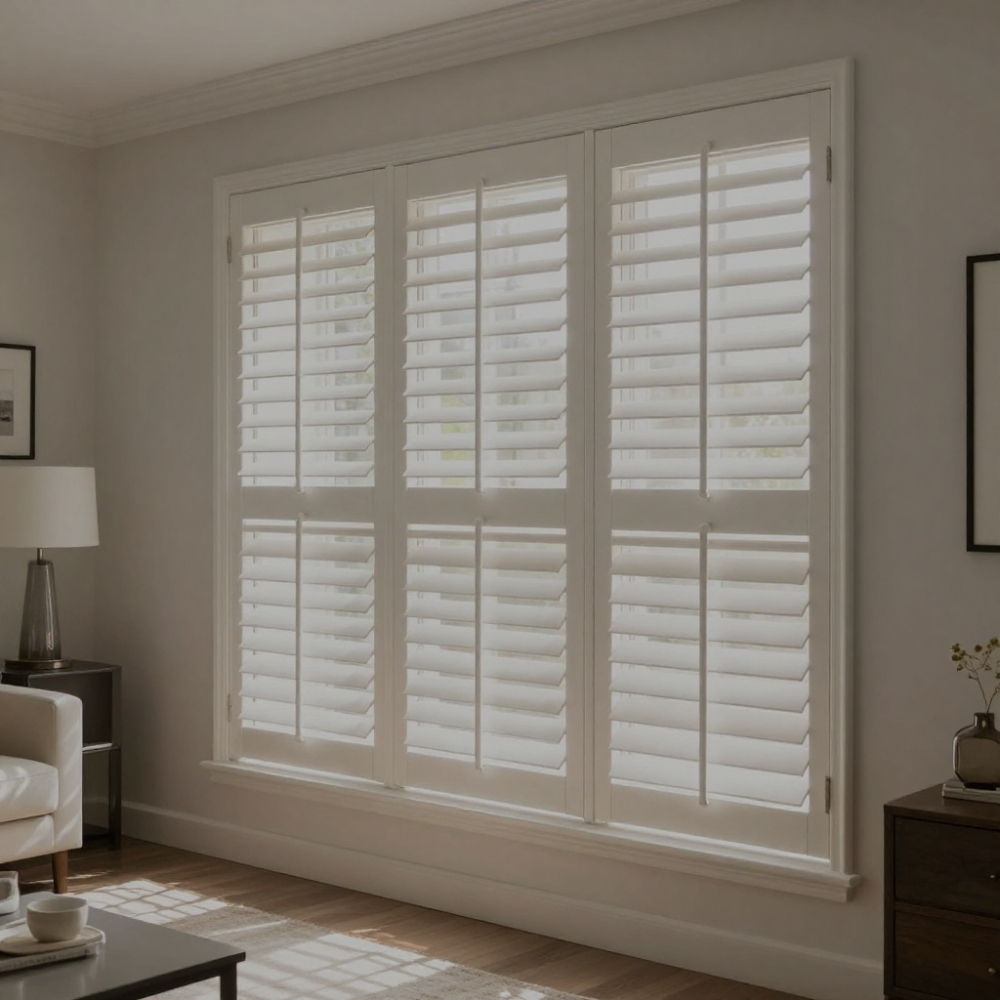
We supply and fit shutters in Gidea Park with the rails, panel joins and louvre size set out from the glass in each window, so the shutter lines up with its glazing bars, leaded panels and cross bars. Measuring, fitting and the on-site quote are all free.
Shutters in Gidea Park look right when they follow the window behind them. A mid-rail level with a cross bar all but disappears from the street. One that cuts across a row of small panes looks like an afterthought. So we plan plantation shutters for Gidea Park houses and flats from the glass outwards, and we measure every window ourselves at a free home visit.
Havering adopted a new Gidea Park Conservation Area Appraisal and Management Plan in September 2025. It describes the windows area by area, and this page takes each type in turn. If you live nearer the town centre, see our page on shutters in Romford.
How we plan shutters in Gidea Park by reading the glass first
We start with the glass. A shutter sits right in front of it, so we note where the bars, joins and decorative panels fall and then set the lines of the shutter to match them, window by window.
From outside, you see three shutter lines: the frame round the edge, the joins between panels, and any mid-rail. Louvres (the tilting slats) add fine lines of their own. When those lines agree with the window, the front can look calm. When they don’t, the clash can be the first thing you notice. On each window, we note:
- The height of each transom or main glazing bar (the cross bars between upper and lower glass).
- Where the mullions and uprights (the vertical dividers) fall, so panel joins can sit behind them.
- Any leaded glass you want to keep in view.
- The depth of the reveal, the inside face of the window opening.
- Handles and stays that need room when the panels close.
New to these terms? Our guide to shutters explains each part.
Shutters across Gidea Park’s four character areas
Havering splits the conservation area into four character areas, and because the windows differ from one area to the next, our starting point for shutters in each one differs too.
- Gidea Park North, north of Main Road: larger houses on Heath Drive, Reed Pond Walk and Parkway, and smaller cottages in Meadway and Risebridge Road. The appraisal describes windows set out in horizontal rows, now and then broken by a tall opening.
- Gidea Park South, along Balgores Lane, Squirrels Heath Avenue and Crossways: mainly two storey houses under hipped tile roofs on narrower plots, traditionally with multi-pane timber casements.
- The Main Road corridor: buildings of two or three storeys, some behind a forecourt and some right on the pavement, including blocks of flats.
- Eastern Avenue, Brook Road and Heath Drive North: home to the flat-roofed 1934 exhibition houses on Brook Road and pairs of exhibition semis on Eastern Avenue.
Shutters for small-pane timber casements in Gidea Park
Set the mid-rail or tier split on the main glazing bar, and choose a louvre close in scale to the panes. Done that way, the shutter can read as part of the window.
Havering’s 2025 appraisal says timber casements are “prevalent, often with small pane glazing” here. A casement opens on side hinges, like a door, and its small panes are held by thin wooden bars. Those bars are what the shutter has to respect. We check:
- Rail height. We measure to the centre of the main cross bar so the rail hides behind it.
- Panel joins. On a two or three leaf casement, joins can follow the uprights between the leaves.
- Louvre scale. Smaller louvres (47mm or 63mm) can sit more comfortably in front of a tight grid.
- Replacements. In Gidea Park South, the appraisal says most windows “appear to have been replaced”, some in uPVC or with a different bar pattern, so we measure your bars, not a typical set.
Which shutter louvre size suits a Gidea Park casement with glazing bars?
| Window you see | Layout we start from | Louvre size to try first |
|---|---|---|
| Small-pane timber casement | Rail or tier split on the main glazing bar | 47mm or 63mm |
| Leaded glass panel | Tier on tier, or cafe style below the leaded part | 63mm |
| Shallow horizontal run | One panel height, no mid-rail, hinged in pairs | 63mm or 89mm |
| Tall mullion and transom window | Full height with the mid-rail at the transom | 89mm or 114mm |
| Brook Road replacement window | Planned to the frame fitted now | 89mm or 114mm |
| Main Road ground floor flat | Cafe style or tier on tier | 63mm or 89mm |
Leaded glass in Gidea Park: keeping it on show with shutters
Yes, you can keep leaded glass in view. Pick a style that leaves the leaded part uncovered, or one whose top opens on its own.
Havering’s appraisal mentions “striking decorative windows in leaded glass” among the casements here. Leaded lights are small pieces of glass held in thin strips of lead, sometimes in a pattern. Your options:
- Tier on tier panels. Fold the top tier back and the leaded glass shows, while the bottom stays closed.
- Cafe style. It covers only the lower part, so a leaded top panel stays in view all day.
- A mid-rail under the leaded section. The louvres above and below can tilt separately.
Where the leaded glass is a small top light above a plain casement, we line the shutter split up with the bar beneath it. The decorative glass then sits in its own clear band.
Shutters for shallow, horizontal window runs in Gidea Park North
A low, wide run of windows can suit one panel height with no mid-rail, split into narrow panels that fold back in pairs. A rail across a short panel crowds it.
In Gidea Park North, the 2025 appraisal says windows are “often arranged horizontally”. The 2008 appraisal describes them as “often quite shallow or small”. This is how we plan for them:
- Leave out the mid-rail. On a window wider than it is tall, one run of louvres looks cleaner.
- One panel per leaf. Joins sit on the uprights between the opening leaves.
- Hinge in pairs. Paired panels can fold back into a smaller stack, which helps where there is little wall either side.
- Enough blades. On a shallow panel, 63mm or 89mm can look more even than 114mm, which leaves only a few blades.
- Smaller for the cottages. Windows on Meadway and Risebridge Road can take 47mm or 63mm, so the shutter does not look heavy.
Window Shutters London
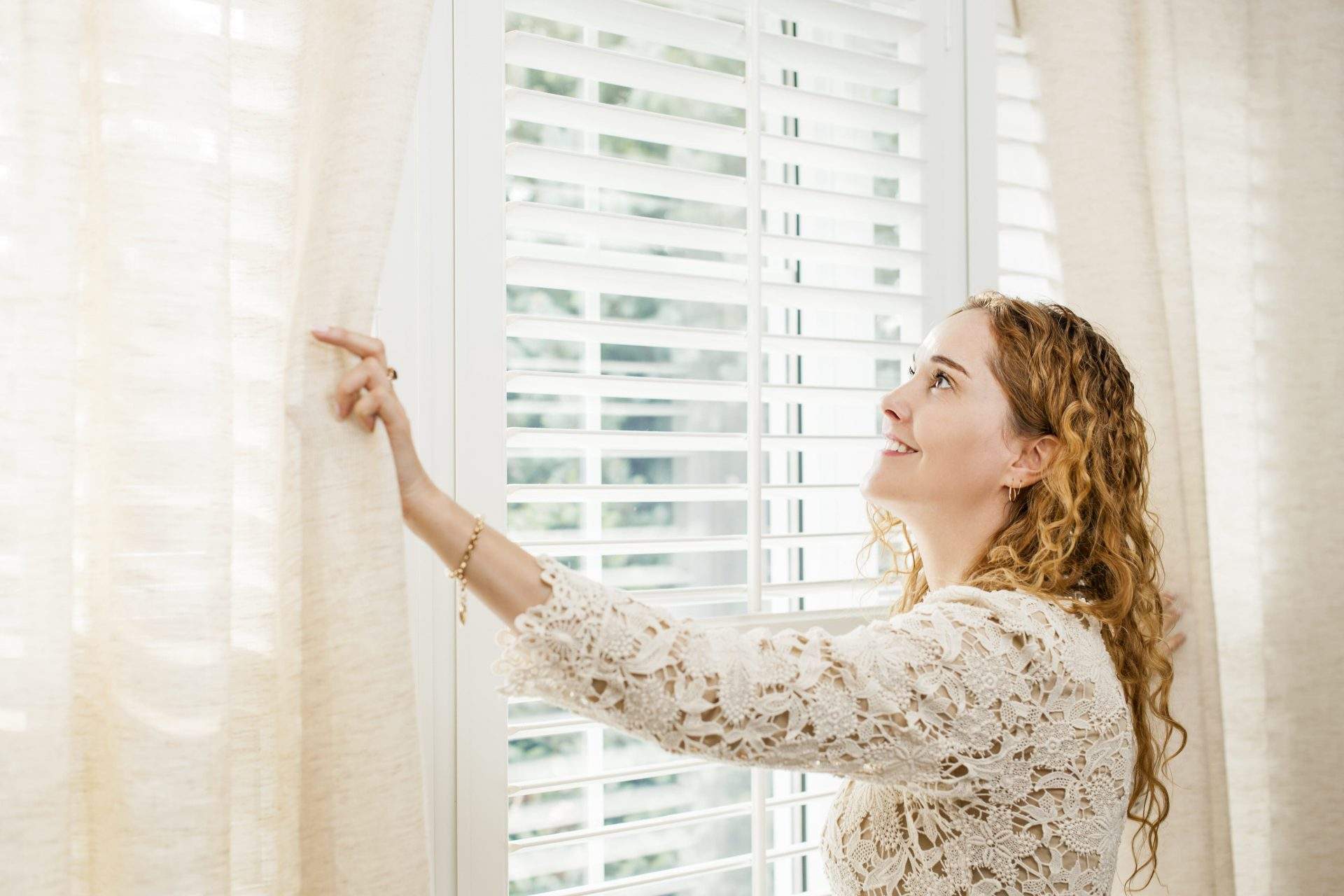
We understand that your London home or business is your pride and joy – a place that reflects your style, personality and design aesthetic. If you are looking to add style and elegance to your windows, shutters are a great alternative to blinds or curtains. Not only do wooden window shutters provide additional privacy, but are also energy efficient, keeping you warm in the winter and cool in the summer.
Shutters London
Why Choose London Blinds 4U for Window Shutters?
– Great Quality
– Made to Measure
– Excellent Customer Service
– Competitive Quotes
– Hassle Free
– Multiple Styles Available
– Free Measuring & Fitting

“They measured my windows first and then 4 weeks after they fitted my blinds and shutters. I would not hesitate to recommend this company to anyone.”
- Liza Harrison
Plantation Shutters London Styles
When considering new shutters in your home or business premises, you must consider the style of building, the room you are looking to install wooden plantation shutters in, and the style you are interested in. Customers should also think about the purpose of the shutters – different styles are better for those looking for optimal privacy, while others allow more light to flood the room. We are equipped with all the knowledge you need to make a perfect choice.
There are many different types of shutters available for your London home or business – picking the right design is key to your comfort and style! We stock many styles of bespoke shutters:

Tier on Tier Shutters London
This type of shutter is basically one shutter fixed above another shutter, giving you the option of controlling the slats individually. For example, you may wish to close the bottom half slats for privacy but keep the top tier slats open to allow light into the room. Tier on Tier Shutters offer flexibility for varied use.
Full Height Shutters London
Full height is the most common type of shutter you may come across day to day. Full height shutters cover the whole of the window. Various options available for full height shutters, one being the option of having a mid-rail. Mid-rails are added to full height shutters for taller windows to strengthen the shutter; they also allow you to operate the upper and lower slats individually, giving you maximum light and privacy control for your London property.
Café Style Window Shutters London
This type of shutter is normally fitted at half height from the window sill upwards. Café style shutters, as the name suggests, are commonly used in restaurants and other catering environments. However, they are also suited for use in homes; the great benefit of these shutters is that they let plenty of light into any room but provide privacy from the base where the shutter is fitted.
Folding Shutters and Sliding Shutters London
For big glass windows, such as French doors and patio doors, sliding or folding shutters on tracked systems are a wise choice. These shutters are easily folded back to one side for practicality and ease of access through doorways or sliding doors. We stock a large variety of plantation shutters in different materials, patterns and colours to ensure our customers always purchase the best design for their individual needs.
Fitting Bespoke Window Shutters in London
Book an appointment today with one of our experienced advisors and we will advise you on what is the best type of shutter for your windows. We use no sales techniques, just straightforward guidance and realistic price quotes.
We offer a free onsite visit and go through the different types of shutters available with you. We can also match Wooden Venetian blinds to complement the shutters for those awkward windows to which shutters cannot be fitted.
Our wooden shutters are made from high-quality basswood and are also available in PVC (faux wood) for increased strength. This option is also more environmentally friendly. All our London shutters are available in various slat sizes, including 47mm, 63mm, 89mm & 114mm. LondonBlinds4U shutters are available in various finishes including whites, off-whites and various wood finishes.
Ask us about our full range, or book an appointment today with one of our experienced advisors!

“Excellent service with two lovely men who did a great job! Thank you!”
- Google review
Tall mullioned windows in Gidea Park: where the shutter mid-rail should sit
Put the mid-rail level with the transom. The cross bar already splits the glass, so a rail at that height can hide behind it, and you can tilt the top and bottom louvres on their own.
A mullion is an upright bar that divides a window. A transom does the same job across it. Havering’s 2008 appraisal describes “very tall casements with mullions and transoms” used now and then to give a front its focus. Because the window is the main feature, we plan it in this order:
- We measure the opening and the height of the transom from the sill.
- We set the rail on full height shutters with a mid-rail to that line.
- If you want the top to open on its own, we look at tier on tier, split at the same height. Our page on how full height and tier on tier differ sets out the choice.
- We place panel joins on the mullions.
- We pick the louvre. A wider one (89mm or 114mm) keeps the blade count down and lets in more light.
With the transom above eye level, you can close the lower louvres for privacy and leave the upper ones open for daylight. That split can suit a tall window on a stair or landing, where the lower glass faces the street.
Shutters for the 1934 houses on Brook Road and Eastern Avenue, Gidea Park
We plan these around the windows in them now, because few originals are left. Havering’s appraisal notes the Brook Road houses have lost their original windows, and says of the exhibition pairs on Eastern Avenue that the windows “were in metal, but nearly all have been replaced”.
It describes the 1934 exhibition houses in Brook Road as “rising two storeys beneath flat roofs in render, brick or painted brick”. That is a very different look from the tiled roofs and small-pane casements elsewhere in the conservation area, so the casement advice above may not apply.
We look at how deep the new frame sits, how much room it leaves in the reveal, and how far its handles stand out. Plain glass with no bars can suit 89mm or 114mm louvres. If the replacement has bars, we line the rails up with them, as on a casement.
Main Road flats near Gidea Park station: shutters at pavement level
For a ground floor flat that opens straight onto the Main Road pavement, cafe style shutters on the lower half give privacy and leave the top glass clear. Flats above can take full height or tier on tier.
Along Main Road, the appraisal says, buildings are two or three storeys, some behind a paved forecourt and others “flush with the pavement edge”. It notes larger buildings in multiple occupancy on the north side, and commercial buildings grouped near Gidea Park station. What we suggest depends on how close passers-by are:
- Flush to the pavement. Cafe style or tier on tier, so the lower part stays closed.
- Behind a forecourt. Full height shutters with angled louvres can be enough.
- Upper floors. These can be less overlooked, so a wider louvre for light may suit.
- Leasehold and rented flats. Ask your landlord, freeholder or managing agent before anything is fixed into the reveal.
Hedges, mature trees and Raphael Park: light and privacy with Gidea Park shutters
A room behind a tall hedge or under a large tree can need more light from its shutters. A room facing open ground, or one that has lost its hedge, can need more privacy.
The appraisal says front boundaries in Gidea Park North “often comprise high or low hedges”, and it finds mature trees on every street. Behind that kind of screen, wider louvres (89mm or 114mm) let more daylight in, and you may rarely close them.
It also notes front gardens adapted for car parking, with boundaries lost. If your hedge came out for a car, the front window is more on show. A mid-rail lets you keep the lower louvres shut and the upper ones open.
Parkway and Heath Drive face out over open space, and Raphael Park forms much of the western edge of the conservation area. With no houses opposite, the view in comes from people passing by, and louvres can be angled so they see blades, not your room.
What Havering’s Gidea Park Article 4 Direction lists, and where internal shutters stand
The Direction lists certain outside works. Its notice does not mention windows, internal works or shutters, and its only mention of a door is a porch built outside one. That is not a blanket yes, so check with Havering before you order, and ask first if you are also changing windows, a porch or exterior paint.
An Article 4 Direction removes some permitted development rights, meaning work you could normally do without a planning application. Havering made the Gidea Park Direction (Art4/4/2015) on 31 December 2015 and confirmed it on 24 June 2016. It applies to all houses in the conservation area, in two control levels. The Direction notice lists:
- Level 1: enlarging, improving or otherwise altering a house, on its front and side elevations.
- Level 1: other roof alterations, outbuildings and pools, and hard surfaces.
- Level 2 adds: a porch outside an external door.
- Level 2 adds: gates, fences, walls, new access and painting the outside.
- Level 2 also takes the house alteration and roof controls round to the rear.
Havering’s owner leaflet says you can still do general repair and maintenance. The 2025 appraisal says an update for windows and doors “would be undertaken at a future date”, so the rules could change. Whether a job counts as an alteration is Havering’s call, not ours, so ask its planning team before work starts. Tell them the shutters will be fitted inside the room, give them the address and say whether you are changing anything else at the same time, such as a window, a door, the porch or the paint on the front.
Shutters in listed and locally listed Gidea Park houses
If your house is listed, ask Havering whether shutters need listed building consent before you order. An older 2008 appraisal notes that consent may still be needed even where work counts as permitted development.
The 2025 appraisal says the statutorily listed buildings in Gidea Park North are all Grade II, and Gidea Park South has none. The appraisal also identifies locally listed buildings, so ask Havering which list, if any, your house is on. We can measure and quote while you wait to hear back.
Shutters in a Gidea Park family home: tilt rods, cords and BS EN 13120
Most full height and tier on tier shutters with the standard tilt use a solid rod on the panel, so there is no cord or chain for a child to reach. Some sliding, bi-fold and cafe style set-ups do use a cord or chain, depending on the product, so ask how a range opens before you choose it for a child’s room. Our page on what BS EN 13120 says about shutters covers the standard.
Your free shutters measuring visit in Gidea Park RM2, step by step
We come to your home, measure each window and give you a quote there and then. Measuring, the quote and fitting are all free.
- You book a free design consultation at a time and place that suits you.
- We note the glass in each window: bars, leaded panels, transoms and mullions.
- We measure every opening and reveal ourselves.
- We talk you through the four louvre sizes and two materials: basswood, a real wood, and PVC (faux wood) for extra strength.
- We give you a free on-site quote for the layout you choose, and tell you then if a style won’t work on a window.
- We come back to supply and fit your shutters, free of charge.
You can browse every style on our page about our shutters across London. For dusting the louvres later, read our notes on caring for shutters.
Talk to us about shutters for your Gidea Park home
We supply and fit shutters from our base at 205a Oxlow Lane, Dagenham, Essex RM10 7YA, and come out to Gidea Park for free measuring and fitting.
- Phone: 07852 257 307
- Email: info@londonblinds4u.co.uk
- Hours: Monday to Saturday, 9am to 9pm, and Sunday, 10am to 6pm
- Online: send a message through our contact page
More questions about Gidea Park shutters
Q: Can shutters fit the small hipped dormer windows on some Gidea Park houses?
Sometimes. Small hipped dormers appear in the 2008 appraisal, and they can have shallow reveals and sloping sides. We measure the dormer at the visit and tell you whether a shutter will fit. If it won’t, we suggest another option.
Q: Should I replace my Gidea Park windows before I order shutters?
Yes, if a window change is planned, do it first. Shutters are measured to the frame you have, so a new frame can change the fit. The 2025 appraisal strongly encourages returning insensitively replaced windows to traditional materials, so talk to Havering about that work before you book our visit.
Q: Can I order shutters for just the front of my Gidea Park house?
Yes. We quote window by window, so you can start with the front rooms and add others later. When you do, we can use the same louvre size so the rooms match.
Q: Can I mix shutters and blinds in one Gidea Park house?
Yes. We supply and fit both, so you can choose shutters for some windows and blinds for others. See the options on our page about blinds in Gidea Park.
Q: Is there a call-out charge for a shutters visit in Gidea Park?
No, there is no call-out charge. You can get a price for one tricky window, such as a tall mullioned one, before you decide on the rest of the house.