Wooden vs Faux Wood vs Aluminium Venetian Blinds: Which Survives a Bathroom or Kitchen
Real wood Venetian blinds will warp, swell or discolour in a bathroom or a steamy kitchen over time, regardless of how well made they are, because solid timber absorbs moisture. Faux wood (PVC-based) and aluminium Venetian blinds are fully moisture-resistant and are the correct choice for bathrooms, en-suites and kitchens near a hob or sink. Real wood is the better aesthetic and thermal choice for living rooms, bedrooms and dry hallways, where its actual advantages, warmth of look and slightly better insulation, matter without the moisture risk.
- Key numbers: 25mm and 50mm are the two standard Venetian slat widths · faux wood blinds are typically rated fully waterproof versus real wood’s moisture sensitivity · aluminium slats are the lightest option and the most resistant to both moisture and heat · real wood blinds are generally 20-40% more expensive than an equivalent faux wood specification.
Why Real Wood Warps in a Bathroom: The Actual Mechanism
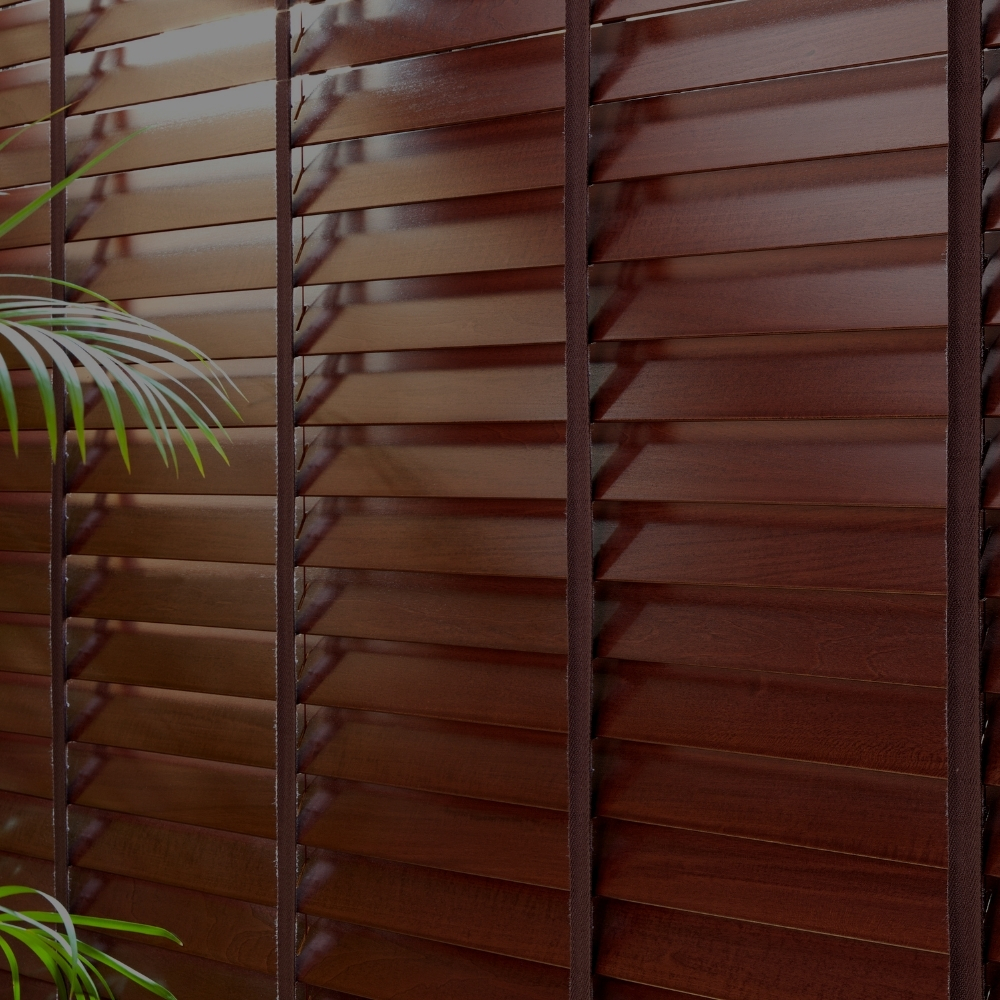
Solid timber is a hygroscopic material, meaning it absorbs and releases moisture from the surrounding air as humidity changes. A bathroom used daily for showers or baths swings through repeated cycles of high humidity followed by drying out, and each cycle causes the wood slats to expand and contract slightly. Over months, this repeated movement causes slats to bow, cup or twist, and finishes can crack or peel as the wood beneath moves independently of the coating on top. This isn’t a manufacturing defect or a sign of poor quality material; it is simply what solid wood does when it’s regularly exposed to steam, and no amount of sealant or lacquer fully prevents it in a room with sustained high humidity.
Faux Wood: Why It Solves the Problem Without Losing the Look
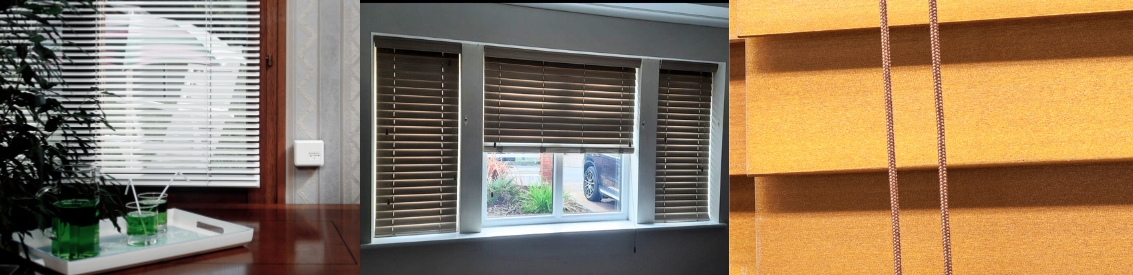
Faux wood Venetian blinds are made from a PVC-based composite moulded and finished to closely resemble the grain, colour and texture of real timber. Because the material itself is a non-porous plastic rather than an absorbent natural fibre, it does not swell, warp or discolour with repeated humidity exposure, making it fully suitable for bathrooms, en-suites, and kitchens near a hob, sink or dishwasher. The trade-off is a very slightly less warm, tactile finish than genuine wood grain up close, and a marginal weight increase per slat, though for most buyers the visual difference at typical viewing distance is negligible.
Aluminium: The Lightest and Most Moisture-Tolerant Option
Aluminium Venetian blinds use thin metal slats, typically finished in a powder-coated colour, and offer the strongest moisture and heat tolerance of the three materials, alongside the lightest overall weight, which matters on wider windows where slat weight affects how smoothly the blind tilts and raises. Aluminium is the standard choice for small bathroom and en-suite windows specifically because it has no organic material to degrade at all, and it copes well with steam, splashes and the temperature swings near a hob better than any painted or coated wood-effect surface.
Suitability Matrix: Which Material for Which Room
| Room | Recommended material | Why | Who this is wrong for |
|---|---|---|---|
| Bathroom / en-suite | Faux wood or aluminium | Both fully moisture-resistant; real wood will warp with repeated steam exposure regardless of finish quality | Anyone wanting the exact tactile grain of genuine timber not achievable in this room without the moisture risk |
| Kitchen, near hob or sink | Aluminium or faux wood | Resists steam, grease and splash exposure without swelling; wipeable surface for grease build-up | Kitchens with minimal cooking steam and a window well away from the hob, where real wood becomes viable |
| Living room, dry | Real wood or faux wood | Real wood’s warmth and grain genuinely suit a living space with no sustained humidity risk | Rooms doubling as a conservatory extension with high ambient humidity |
| Bedroom, dry | Real wood, faux wood, or aluminium | All three work well; choice comes down to aesthetic and budget rather than moisture concerns | N/A genuinely open choice in a standard dry bedroom |
| Conservatory | Faux wood or aluminium | Conservatories run hotter and more humid than a standard room, particularly if poorly ventilated, putting real wood at similar risk to a bathroom | Well-ventilated, climate-controlled conservatories with genuinely low humidity, where real wood becomes a marginal option |
Why Real Wood Is Not Suitable for Bathrooms
If your heart is set on genuine timber slats specifically for a bathroom, we would rather tell you now than sell you a blind that starts cupping within a year. There is no wood treatment or sealant on the market that reliably prevents warping under sustained bathroom humidity, and any supplier claiming otherwise for solid timber in that environment is not being straight with you. Faux wood gets remarkably close to the real thing visually and is the honest recommendation for that room.
Venetian Slat Width: 25mm vs 50mm
| Slat width | Light control | View when open | Maintenance | Best for |
|---|---|---|---|---|
| 25mm | Finer, more precise light control with more slats per window | Slightly more visually busy when open, thinner sightlines | More slats to dust individually | Smaller windows, bathrooms, kitchens where precise light control matters |
| 50mm | Broader control in fewer adjustments | Cleaner, less cluttered view through when open | Fewer, larger slats, generally quicker to dust | Larger windows, living rooms and bedrooms wanting a bolder, more contemporary look |
Real Scenario: A Steamy En-Suite in a Chadwell Heath New-Build
A customer requested real wood Venetian blinds for a small en-suite bathroom to match existing wooden Venetians in the adjoining bedroom. Fitting solid timber in that specific room would have led to visible warping within a year given the daily shower use and limited ventilation typical of an en-suite. Faux wood in a closely matched tone and grain finish gave a near-identical look from normal viewing distance while being fully rated for the moisture exposure, and the bedroom kept its genuine wood Venetians where the humidity risk didn’t apply.
Real Scenario: A Galley Kitchen in an Ilford Terrace With the Window Directly Behind the Hob
A kitchen window positioned close behind the hob sees regular steam and occasional grease in the air during cooking. Aluminium slats were specified over both real and faux wood specifically because the powder-coated metal surface wipes clean of grease residue more easily than either wood option, and has no organic material at all to be affected by the heat and steam rising from the hob during regular use.
Mistakes People Make Choosing Venetian Blind Material
- Choosing real wood in a bathroom for the look, without being told about warping risk: the single most common and most avoidable mistake in this category, and one most suppliers don’t proactively raise before the sale.
- Assuming a varnished or sealed wood finish prevents warping: sealants slow moisture absorption but don’t eliminate it under sustained, repeated humidity cycles typical of daily bathroom or shower use.
- Fitting real wood in a conservatory assuming it behaves like an indoor room: conservatories run hotter and, if poorly ventilated, more humid than a standard room, putting real wood at a similar risk profile to a bathroom.
- Choosing 25mm slats purely on trend without considering the window size: narrow slats on a very large window can look visually busy and require noticeably more dusting than 50mm would on the same opening.
Full Comparison: Real Wood vs Faux Wood vs Aluminium
| Factor | Real wood | Faux wood (PVC) | Aluminium |
|---|---|---|---|
| Moisture resistance | Poor will warp with repeated humidity exposure | Excellent fully waterproof composite | Excellent no organic material to degrade |
| Look and feel | Genuine grain and warmth, the benchmark aesthetic | Very close visual match, marginally less tactile up close | Sleek, contemporary, clearly metal rather than wood-effect |
| Weight | Moderate | Slightly heavier than real wood per slat | Lightest of the three |
| Typical cost | Highest | Moderate, generally 20-40% less than equivalent real wood | Generally the most affordable of the three |
| Best rooms | Living rooms, bedrooms, dry hallways | Any room, particularly where a wood look is wanted in a humid space | Bathrooms, kitchens, small windows, anywhere weight or moisture matters most |
How Long Each Material Lasts, and What Degrades It
Real wood, kept in a genuinely dry room, is a durable, long-lasting material and often the longest-lived of the three when moisture is never a factor, though direct, sustained sun exposure can fade or dry out the finish over many years. Faux wood holds its colour and shape reliably across a very wide humidity and temperature range and is generally the lowest-maintenance option for a room that sees regular steam or splashes. Aluminium is the most physically durable against dents and moisture but can show scuffs on a matte powder-coated finish more visibly than a wood-grain surface, and slats can bend if handled roughly, though this rarely affects function.
Venetian Blind Material Myths Worth Retiring
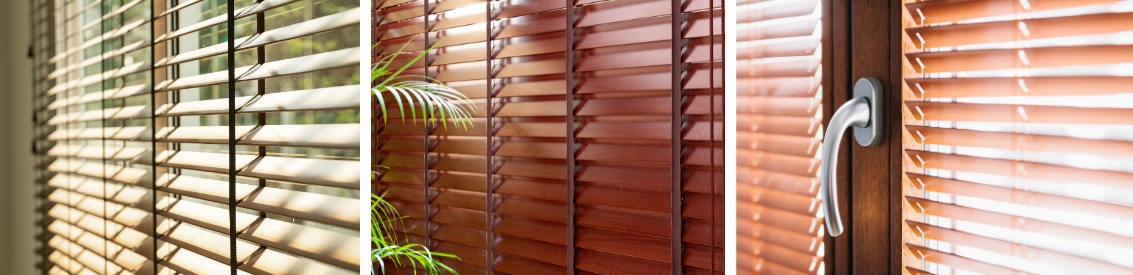
- Myth: faux wood always looks obviously fake up close. Fact: modern faux wood grain and colour-matching has closed most of the visible gap with genuine timber; the difference at normal viewing distance in a typical room is minor.
- Myth: aluminium blinds are only suitable for offices, not homes. Fact: aluminium is a standard, widely used domestic option, particularly well suited to bathrooms and kitchens, and available in a broad range of contemporary finishes for any room.
- Myth: a good enough sealant makes real wood bathroom-safe. Fact: sealants reduce but do not eliminate moisture absorption in solid timber under sustained bathroom-level humidity cycling; this is a fundamental limitation of the material, not a fixable finish issue.
Real Wood vs Faux Wood vs Aluminium: Typical Costs
Real wood commands the highest price per blind of the three materials, reflecting both the raw material cost and the more involved finishing process needed to produce a consistent, attractive grain across every slat. Faux wood typically sits at a genuine discount to real wood, generally in the region of 20 to 40% less for an equivalent size and finish quality, while remaining a visually close substitute. Aluminium is usually the most affordable of the three, reflecting both a lower material cost and a lighter, simpler manufacturing process, though premium powder-coated or textured aluminium finishes can narrow this gap. For a typical three-bedroom home with a mix of dry living spaces and one or two bathrooms, specifying real wood in the living room and bedrooms and faux wood or aluminium in the bathroom and kitchen, rather than real wood throughout, both protects against the warping risk in wet rooms and moderates the total project cost meaningfully compared with an all-real-wood specification.
Moisture Resistant Alternatives to Venetian Blinds
Venetian blinds in faux wood or aluminium are not the only moisture-resistant option worth naming for a bathroom or kitchen. Waterproof roller blinds in a PVC-coated or vinyl-backed fabric offer a similar level of moisture tolerance to faux wood Venetians, with a cleaner, single-surface wipeable finish rather than individual slats to clean, at a broadly comparable cost. Waterproof plantation shutters in ABS, covered in depth in our shutters versus blinds comparison, sit at a higher price point again but offer the most robust, fully wipeable and longest-lasting option of all for a heavily used family bathroom, particularly where budget allows treating the bathroom as a premium room rather than an afterthought. The right choice among these three moisture-resistant options often comes down to the specific look wanted, slatted Venetian control, a clean single-surface roller, or a built-in shutter finish, rather than any one being categorically superior for moisture resistance alone, since all three genuinely solve the warping problem that affects real wood.
London Blinds 4U provides free measuring and fitting for made to measure blinds across East London, North London, South London and West London, with suitable materials recommended for each room.
Our Verdict
Real wood earns its premium price in living rooms, bedrooms and dry hallways, where its aesthetic genuinely justifies the cost and no moisture risk exists to undermine it. For bathrooms, en-suites and kitchens near cooking steam, faux wood is the honest recommendation if you want the wood look, and aluminium is the honest recommendation if you want the lightest, most moisture-tolerant option regardless of look. Waterproof roller blinds and ABS shutters are both worth considering as alternatives to a Venetian entirely in a heavily used wet room. We would rather steer you to a genuinely moisture-resistant option for a wet room and lose the higher-margin real wood sale than fit a blind we know will warp within a year.
Venetian Blind Material FAQ
Q: Will real wood Venetian blinds definitely warp in a bathroom?
A: Very likely over time, given regular exposure to steam and humidity cycling from showers or baths. This applies regardless of finish quality, since solid timber absorbs and releases moisture as an inherent property of the material, not a manufacturing defect.
Q: Can I get faux wood blinds that look genuinely like real wood?
A: Yes, closely. Modern faux wood grain and colour-matching technology gets remarkably close to genuine timber at normal viewing distance, and we can show you both materials side by side at your free measuring visit to judge for your own window.
Q: Is aluminium too industrial-looking for a home bathroom?
A: Not inherently. Aluminium slats come in a wide range of powder-coated finishes, from bright white through to warmer neutral tones, and suit contemporary bathroom design well rather than reading as strictly commercial or clinical.
Q: Which material is best for a kitchen window right behind the hob?
A: Aluminium or faux wood, both of which wipe clean of grease and steam residue without absorbing moisture, versus real wood, which risks both warping and grease staining in that specific position.
Q: Do faux wood blinds cost much less than real wood?
A: Generally yes, typically 20 to 40% less than an equivalent real wood specification, alongside being the more practical choice for any room with even moderate humidity.
Q: Should I choose 25mm or 50mm slats for a small bathroom window?
A: 25mm often suits smaller windows well, giving finer light control without looking oversized, though 50mm remains a perfectly valid choice on a larger bathroom window where a bolder look is preferred.
Q: Can real wood blinds be fitted in a conservatory?
A: Generally not recommended unless the conservatory is well-ventilated and genuinely low-humidity, since conservatories run hotter and often more humid than a standard indoor room, putting real wood at similar warping risk to a bathroom.
Q: Which material is easiest to clean day to day?
A: Aluminium and faux wood both wipe clean easily with a damp cloth and resist staining better than real wood, which needs a dry dusting approach to avoid introducing moisture to the timber.