
Plantation Shutters vs Blinds: Full Cost and Suitability Comparison
Plantation shutters cost meaningfully more upfront than blinds, roughly two to four times as much per window depending on material and size, but they typically last decades rather than years, can add kerb appeal and offer better insulation. Blinds cost less upfront, offer far more style and colour variety, and suit renters, frequent redecorators and tighter budgets. Waterproof ABS shutters, from around £290 per square metre, are the correct choice for bathrooms over painted timber or moisture-sensitive materials.
Upfront Cost: What You Are Actually Comparing
A made to measure blind for a standard window typically costs a fraction of an equivalent shutter, with the exact figure depending on fabric or material choice, motorisation and blind type. Plantation shutters are usually priced by area and material. Waterproof ABS shutters, the correct specification for a bathroom or wet room, typically start in the region of £290 per square metre, with real hardwood and premium finishes costing more. For a typical window, shutters can sit at around two to four times the cost of a comparable blind.
Lifespan: Where the Cost Comparison Starts to Narrow
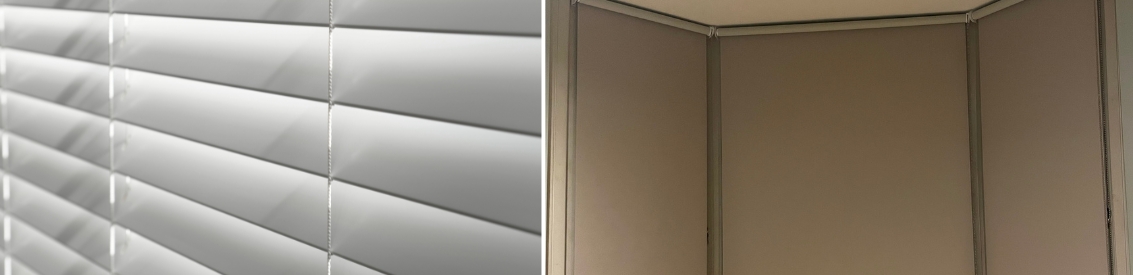
A well made blind with correctly specified fabric and properly fitted mechanisms typically performs reliably for around five to ten years of normal domestic use. Plantation shutters, being a solid built in fixture rather than a fabric mechanism, commonly last twenty years or more with basic care. Over a long ownership period, the yearly cost gap between shutters and blinds can narrow considerably.
Suitability Matrix: Shutters or Blinds by Situation
| Situation | Better choice | Why | Who this is wrong for |
|---|---|---|---|
| Renting or short term tenancy | Blinds | Lower upfront cost and less commitment to a fixed fitting | Long leaseholders planning to stay 10+ years |
| Bathroom or wet room | Waterproof ABS shutters or moisture resistant blinds | Both cope with humidity well, with shutters giving a built in finish | Very tight budgets, where faux wood or aluminium Venetian blinds cost less |
| Victorian or Edwardian bay | Shutters, particularly full height or tier on tier | Works well with the character and geometry of period bays | Rental properties where the investment is unlikely to be recovered |
| Frequent redecorators | Blinds | Much easier and cheaper to change colour, pattern or style | Homes keeping one settled long term colour scheme |
| Large property on a fixed budget | Blinds for most rooms, shutters selectively | A mixed approach keeps costs under control while using shutters in key rooms | Projects where full house shutters are comfortably affordable |
When Shutters Are Not the Right Investment
If you are renting short term, redecorating frequently, or working to a tight budget across many windows, shutters are often the wrong choice purely on cost and commitment. A well specified blind can make more sense in these situations, with shutters reserved for rooms or properties where the longer ownership horizon justifies the investment.
Shutter Materials: Real Wood, Faux Wood and Waterproof ABS
| Material | Moisture resistance | Typical relative cost | Best for |
|---|---|---|---|
| Real hardwood | Poor in high humidity, needs a dry room | Highest | Living rooms, bedrooms and dry hallways wanting a premium natural look |
| Faux wood, PVC based | Good, moisture tolerant | Moderate | Most rooms, balancing appearance and durability |
| Waterproof ABS | Excellent, fully waterproof | Moderate to high | Bathrooms, wet rooms, kitchens and conservatories |
Real Scenario: A Victorian Bay Window in Romford
A customer with a Victorian terrace bay window in Romford was deciding between three sectioned Roman blinds and a custom shaped full height shutter. The shutter option cost roughly three times the blind alternative, but the customer intended to stay long term and valued the appearance and insulation benefit. Given the ownership horizon, shutters were the stronger recommendation.
Real Scenario: A Rented Flat in Ilford on a Two Year Tenancy
A tenant renting a flat in Ilford on a fixed term tenancy asked about shutters for the living room. Given the short tenancy and the likelihood of moving before the investment paid off, made to measure blinds were the clearer choice.
Mistakes People Make Choosing Between Shutters and Blinds
- Choosing shutters purely for kerb appeal without considering how long you will stay: the value case depends heavily on a long ownership period.
- Fitting real hardwood shutters in a bathroom: the same moisture risk affecting real wood Venetian blinds applies here. See our real wood vs faux wood vs aluminium guide.
- Assuming blinds are always cheaper: premium motorised blinds can cost more than a modest shutter installation on a small window.
- Shuttering every window in a large house on a fixed budget: a mixed approach often gives better value.
Full Comparison: Plantation Shutters vs Blinds
| Factor | Plantation shutters | Blinds |
|---|---|---|
| Typical upfront cost per window | 2 to 4 times a comparable blind | Lower in most standard specifications |
| Typical lifespan | 20+ years with basic care | Around 5 to 10 years of normal use |
| Style and colour variety | More limited, though colour matching is available | Very wide range of fabrics, colours and patterns |
| Resale and kerb appeal | Often positive, particularly on period properties | Usually more neutral |
| Suitability for renters | Poor, a fixed built in investment | Strong, lower cost and easier to replace |
| Insulation benefit | Meaningful, particularly full height styles | Varies by type, with thermal fabrics narrowing the gap |
How Long Each Option Lasts, and What Shortens That Lifespan
Shutters primarily degrade through hinge wear, finish deterioration in strong sun and, for solid timber, warping in humid rooms. Blinds primarily degrade through fabric fading, mechanism wear and general wear on cords or chains. Correct room specification matters for both. Our Venetian blind material guide covers moisture resistant materials in more detail.
Colour and Style Range: Where Blinds Still Have the Edge
Blinds retain a strong advantage in the breadth of colour, pattern and texture available. A vertical blind or roller blind fabric range can run to hundreds of colours and patterns. Shutters usually sit within a more restrained palette of whites, off whites, greys, wood tones and selected special order colours.
Shutters vs Blinds Myths Worth Retiring
- Myth: shutters are always dramatically more expensive than any blind. Fact: the gap depends on the exact specifications being compared.
- Myth: blinds always look cheaper than shutters. Fact: a quality made to measure blind can look more polished than a low grade shutter.
- Myth: shutters need far more maintenance than blinds. Fact: shutters usually need only occasional wiping, while some fabric blinds need more regular cleaning.
Curtains as a Third Option
Curtains remain a genuine third alternative. They can provide a soft, traditional look and useful thermal and sound reduction benefits, but they are weaker for precise light control and take up more space when open.
A Staged Approach to Shutters
For households wanting shutters throughout the home but working within a single project budget, a staged approach can make more sense than fitting every room at once. Start with the highest impact rooms, often the living room, main bedroom or a period bay visible from the street, then use blinds elsewhere until later phases. If you are comparing shutter layouts, see our guide to full height vs tier on tier shutters.
Our Verdict
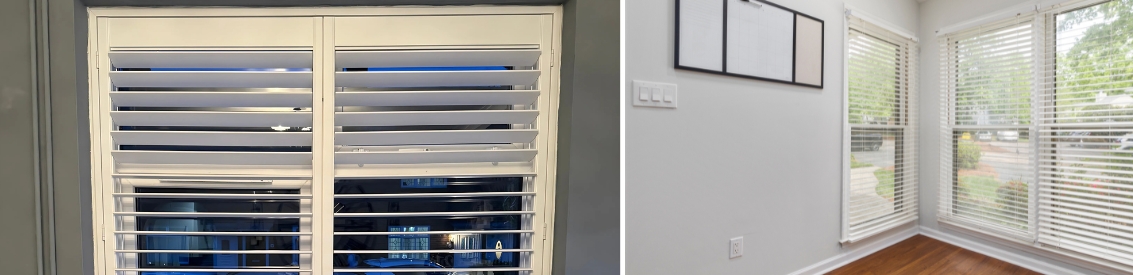
For a long term home, particularly a period property with a bay window, plantation shutters can justify the extra cost. For renters, frequent movers and tighter budgets covering many windows, blinds are the more practical choice. Curtains remain a valid third option where thermal performance and a traditional look matter more than precise light control.
London Blinds 4U provides free measuring and fitting for blinds and shutters across East London and the wider London area. Our areas we cover page includes North London, South London, West London, Central London and surrounding areas.
Plantation Shutters vs Blinds FAQ
Q: How much more do plantation shutters cost than blinds?
A: Generally two to four times the cost of a comparable blind per window, depending on shutter material and blind specification. Waterproof ABS shutters typically start around £290 per square metre as a reference point.
Q: Do shutters really last longer than blinds?
A: Yes, typically. Well made shutters commonly last twenty years or more with basic care, compared with a more typical five to ten year lifespan for a well used blind.
Q: Are shutters worth it for a rented property?
A: Usually not. The fixed built in nature of the investment means blinds are normally the more sensible option for a short or uncertain tenancy.
Q: Can shutters be fitted in a bathroom without the wood warping risk?
A: Yes, provided you specify waterproof ABS rather than real hardwood. Our wet room material guide explains why moisture resistant materials matter.
Q: Do shutters add resale value to a property?
A: They can contribute to buyer appeal, particularly in period properties, but the exact effect varies by property, market and installation quality.
Q: Which offers better insulation, shutters or blinds?
A: Well fitted shutters can provide a meaningful insulating layer. Thermal and honeycomb blinds can narrow the gap depending on construction and fitting.
Q: Can I mix shutters and blinds within the same house?
A: Yes. This is often the sensible approach on a fixed budget, with shutters used in key rooms and made to measure blinds elsewhere.
Q: Do shutters need much maintenance compared with blinds?
A: Usually less day to day. Shutters generally need occasional wiping, while fabric blinds can need more frequent dusting or spot cleaning.